

Last week’s post addressed Mark Ritson’s critical reaction to Unilever CEO Fernando Fernandez’s speech on the company’s social-first strategy. Ritson described the approach as a “failure in basic brand management” (1). Last week we suggested the strategy is actually to use social media as part of an “ecosystem” that also harnesses mass media. Here, in this second post, we zoom out and look at Unilever’s full growth strategy.
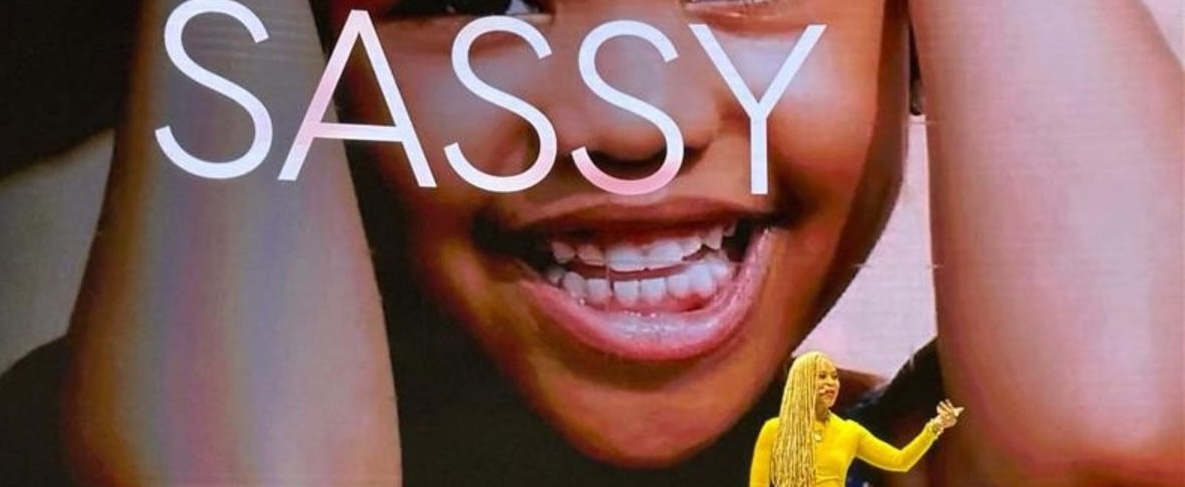
When you get past the headline-grabbing soundbite that “big corporate, big brand messages are gone” and watch Fernandez’s full presentation (2), a more rounded and sensible strategy comes into view. The approach summarised as SASSY is actually rooted in product superiority (Science, Aesthetics, Senorial), amplified by social-first demand generation (Said by other and Young Spirited). Importantly, another key pillar that has had little or no media coverage is converting demand into sales through stronger in-store and digital execution. In other words: the strategy is not just about sizzle, it has plenty of sausage as well!


1. Rooted in product superiority = sausage
The first three parts of SASSY are not about communication at all. They are about making products more desirable.
S = Science
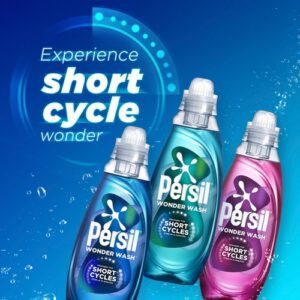
Fernandez argues that Unilever’s science has “always been ahead of our marketing”. He highlights a base of 4,500 scientists and €1 billion a year in R&D as key asset that needs to be better leveraged. One examples he quotes is the Wonder Wash line of laundry detergents, designed specifically for shorter 15-minute wash cycles. Fernandez says the product has delivered close to €200 million in sales in one-and-a-half years and is “changing completely how people are washing in Europe.”
Another interesting point is a focus not only on new R&D, but on monetising the back catalogue of science more effectively. Fernandez says some historic innovation stock was under-used because Unilever’s price points were too low to capture the value. That is where the premiumisation push comes in. He cites K18 as helping the business reach an $80 price point in hair care, a good example stretching price architecture upwards to enable profitable, science-led innovation.
A = Aesthetics
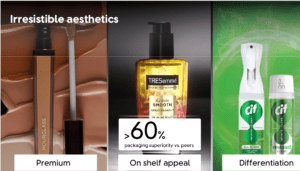
Fernandez’s second driver is aesthetics: premium look, on-shelf appeal and functional differentiation. He talks about this across the whole portfolio, from prestige beauty to more mundane categories such as household cleaning, citing examples such as the new Cif probiotics range. Better aesthetics is about more than just making brands look pretty. More attractive packaging helps justify premium pricing, improves visibility at shelf and make social content work harder, because the pack itself is more distinctive and more “postable”.
S = Sensorial
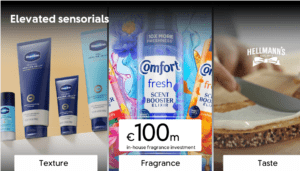
The third growth driver is sensorial. Fernandez highlights texture in facial care, fragrance in laundry and changing taste preferences in foods. His point is that as some functional gaps narrow, sensory experience becomes a bigger source of differentiation. He goes as far as saying that in laundry “there is no tough dirt anymore”, so elevated sensorials now matter more than ever. To support this push, Unilever is investing €100 million in its own fragrance house.
Again, this is a useful corrective to the “it’s all influencers now” narrative. A lot of what Unilever is doing is actually very classic brand-building: make the product better, make it look better and make it feel better.
2. Amplified using Social-first = sizzle
Only after product superiority comes the communications piece.
Fernandez bundles the final two elements of SASSY — Said by Others and Young Spirited — into what he calls a “Social First Demand model”. This is the bit that got all the headlines.
S = Said by others
There is no doubt the scale of the shift is striking. Fernandez says Unilever now has 180,000 content creators working for the Beauty & Wellbeing division, up from 75,000 the year before, and close to 300,000 across the company as a whole. In Beauty, the number of assets increased 7x last year. But does a social first approach really mean abandoning mass marketing, as Fernandez’s comments suggest?
Here, a more balanced view comes from Unilever CMO Leandro Barreto (3). He argues that culture is now an ecosystem, ranging from “mass-participation moments that capture global attention hyper-local micro-influencers”. In other words, micro and mass are not alternatives. They work together. This feels much more plausible. And it is backed up by what Unilever is actually doing. The company’s Wonder Wash campaign, for example, did not rely only on creators. It used TV, online, out-of-home and in-store, plus market-specific experiential activations (4).
Another interesting issue Fernandez raises is the internal resources needed for a social first approach. “Marketing today is hard work,” he says. “The time of lazy marketing, a couple of ads a year for a couple of innovations, are gone.” He highlights an exponential growth in the infrastructure being built for social media. A key enabler here is AI. Fernandez says the explosion of content is “only possible through the adoption of AI at scale in content creation.” The objective is to create marketing “content engines” that can generate, personalise and adapt thousands of assets in real time.
Y = Young spirited
The final element of SASSY is about being immersed in culture: contemporary, experiential and relevant.
Fernandez uses Vaseline to make the point. It is a 155-year-old brand that has delivered 12% volume growth over the last two years. A key growth driver was the Vaseline Verified campaign. This turned viral consumer hacks into a brand platform by testing them in the lab, and Unilever says it delivered a 43% uplift in sales.
To be effective here, a clear brand positioning is important as ever.“We don’t just ‘show up’ in culture, we participate with intention,” says CMO Leandro Barreto. “That starts with clarity on what the brand stands for, what makes it distinctive and where it has the credibility to contribute – and equally, where it doesn’t.”

3. The overlooked bit: driving in-store activation
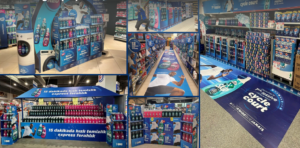
And here we see the part of Fernandez’s strategy that has received much less media coverage, presumably because it is less sexy than influencer marketing! But it is just as important, if not more so, I suggest. Unilever is building a “frontline machine” based on Perfect Stores: a template to run the business across traditional trade, modern trade, measured using nine key metrics. Examples of delivering against these metrics include the Wonder Wash launch in the UK and upcoming FIFA-linked activations for deodorants, hair care and skin cleansing.
“Physical presence in a store is more important than ever,” Fernandez states. He wants shoppers to walk into a store and “feel that this is a Unilever store.” He gives a vivid example from central India where Unilever accounts for 12% of the sales of that store, versus only 1.6% for the second supplier. This is classic FMCG marketing. Better visibility. Better secondary displays. Better execution at the moment of choice.
And the same thinking applies online. Unilever is building three digital commerce hubs. In the US, the focus is on partnerships with retailers such as Walmart.com and Amazon. In China, platforms such as Douyin and TikTok Shop are growing by more than 50%, driven by content-to-commerce. In India, quick commerce is still only 3% of revenue but is growing by more than 100%, with the need for new supply chains to service dark stores.
The recent Google Cloud partnership is another interesting dimension. The five-year deal is designed to build new capabilities in brand discovery, measurement and AI-augmented marketing, as shopping shifts towards more conversational and agentic experiences.
Conclusion
The lazy reading of Fernandez’s strategy is that Unilever is ditching classic brand building in favour of an army TikTok influencers. But the fuller picture is a much more rounded strategy based on better products, amplified through social-first, culturally relevant marketing and converted through stronger in-store execution.
Of course, the proof will be in the numbers and Fernandez himself says that financial metrics will be the ultimate test. In an interview after taking the CEO role (5), he said the focus on “multi-year scalable innovation platforms, desire at scale and better in-market execution” would drive the level of growth investors “demand and deserve.”
Time will tell if he is right!
SOURCES
