


Does consistent, brand-led marketing pay off? Yes, it absolutely does, according to a recent study done by research agency System 1 and the Effie awards body (1). This significant study, The Creative Dividend, combines the substantial data bases of both organisations, with 1,265 campaigns across America & Europe and 200,000+ global respondents.
In this post, we share some headlines from the research and the implications for your marketing approach.
1.Brand effectiveness drives business growth
The research confirms the power of “brand-led growth”, as opposed to driving growth with tactical marketing. Campaigns that achieved 4+ “Brand Effects” (e.g. Awareness, Image, Distinctiveness) achieved more “business results” (e.g. Revenue, Profit, Market Share) than those with less Brand Effects.
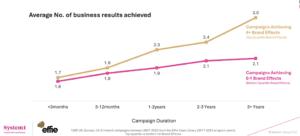
In contrast, the more campaigns focused on short-term objectives (e.g. impressions, traffic), the less likely they were to drive share and profit growth.

2.Combine Emotional “sizzle” and product “sausage”
One of our core principles regular readers will know is the idea of telling a product story wrapped in emotion. We call this combining the “sausage and the sizzle”, with an example being the recent Costa Coffee campaign we posted on.

The study confirms the effectiveness of this approach. Campaigns with high emotion deliver more brand and business effects than those with low emotion (as measured by System 1’s Star Rating), especially when run for the long term (2+ years).

3.Drive broad reach
Driving broad reach is another key brandgym principle, inspired by the work of Ehrenberg-Bass. Broad targeting boosts profit growth, for both high and low emotion campaigns. To note, combining the “worst of both worlds”, low emotion and narrow reach, is guaranteed to NOT drive profit!

4.“Bake in” your brand
Ensuring your campaign is well branded boosts the probability of profitable growth. This was measured in the study using System 1’s “Fluency” score, which measures how quickly and easily people recognise the brand. See below how emotional campaigns higher fluency (dark green line) are more likely to drive incremental profit.

Strong branding, as you’d expect, also has a huge effect on driving distinctiveness (+70%) and also differentiation (+52%).

5.Measure & treasure your distinctive brand assets
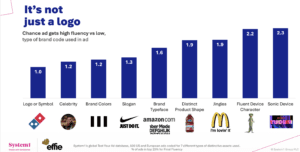
We’ve posted many times on the important role played by “distinctive brand assets” (DBAs), such as logos, slogans and colours. The study confirms how DBAs boost the brand fluency that, as we saw earlier, drives not only distinctiveness but also profit. See how sonic devices (below, far right column) are the most effective form of DBA, as we posted on here. And how characters, that we also posted on here, are almost twice as effective as celebrities.
6.Entertainment helps sell more stuff
We posted recently on the role played by “showmanship” in effectiveness, System 1’s measure of how entertaining a campaign is. And the latest study shows how the most entertaining campaigns (orange line below) are more likely to drive share growth than the least entertaining (pink line)
The study even put a price on being dull. Campaigns classified as dull have an ROI that is 40% lower than those that are more interesting!

7.Consistency creates 2.9x more profit
“Fresh consistency” to build distinctive memory structure is at the heart of our Grow the Core approach. A recent example we posted on here is the growth of the Yorkshire Tea brand.

And this study dramatises just how important creative consistency. The most consistent campaigns deliver an ROI that is 4x higher than the least consistent, with 2.9x more campaigns driving incremental profit.

Challenge: balancing brand building and performance marketing
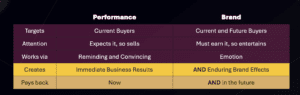
Going forward, a fundamental challenge is ensuing the right balance of short-term “performance marketing” and “brand marketing”, that has short-term AND long-term benefits.
The research highlights the rising spend on digital marketing (light blue line) and the accompanying increase in short-term objectives (dark blue line). Over the same period, the emotional performance of campaigns has declined (pink line), as has the average number of of brand effects (orange line). This suggests that many brand teams need to consider re-balancing their marketing investment allocation.

In conclusion, this amazing piece of research shows just how effective a brand-led approach is at driving profitable growth. A big shoutout to System 1 and Effie for getting the data to back up so many of the principles we’ve been using for the past 24 years!
