

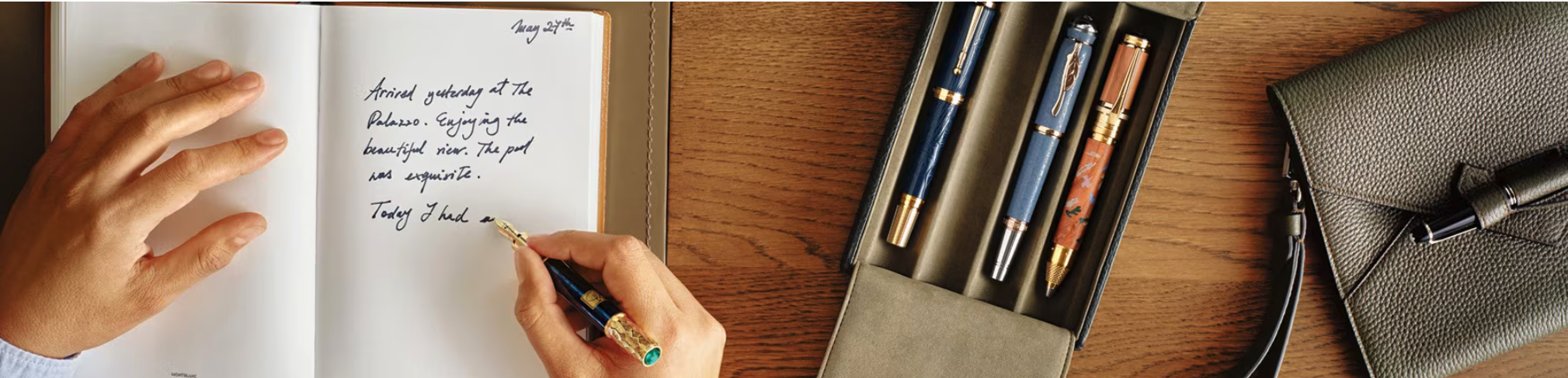
A full-page advertorial for the Montblanc brand in the Financial Times go me thinking this week. In a digitally dominated world, how is a brand famous for pens and handwriting doing today? Montblanc seems to be in pretty good health. It’s hard to get exact sales data, but Montblanc is a key part of Richemont Group’s “Other” business area that grew 7% in the latest year (1). And its e-commerce business is reported to be growing 10-20% a year (2). So, Montblanc does look like a good example of a heritage brand that is thriving not just surviving in the face of massive cultural change. Here’s what they’re doing well.
1. Start with a strong brand belief
At the heart of Montblanc is a simple but emotionally rich brand belief: “Everyone can make their mark.” This is a lovely example of blending function and emotion. The product “sausage” element is obvious: portraying writing with a Mont Blanc pen as a symbol of identity, achievement and legacy. But there is also emotional “sizzle” in the idea of people leaving their mark on the world.
The Montblanc brand brings this to life by linking pens to defining life moments. Signing a deal. Writing a letter to a loved one. Leaving something behind. Part of the Montblanc brand’s rich and authentic heritage is being part of genuinely historic moments. In June 1963, during a visit to West Germany, President John F. Kennedy famously offered his personal Montblanc Meisterstück 149 fountain pen to German Chancellor Konrad Adenauer to sign the “Golden Book”.

2. Zig when the world zags
Many heritage brands today are trying to grapple with digital disruption. Moleskine, for example, have created a digitally linked notebook that replicates handwritten text online. It’s clunky and not great to use based on my own experience.
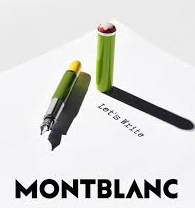
Montblanc have doubled down on being a firmly and proudly analogue brand. This is perfectly captured in the brand idea: “Let’s Write”. This is is a bold, almost defiant call to action that celebrates handwriting in a digital-first world. To support this positioning and encourage people to keep on writing, the brand has reframed the pen. Rather than just being a functional writing tool, a Montblanc pen is a personal statement and a luxury ritual that allow you to express yourself.
This contrarian positioning seems to be working. The global luxury pen category was valued at $2.7billion in 2024 and is projected to grow at a CAGR of 4.8% from 2025 to 2033 (1).
3. Build from a strong core
Many heritage brands try to reinvent themselves and risk losing focus on their core. I posted recently on Burberry re-focusing on outerwear to build a stronger brand foundation. Montblanc is a briliant example of a brand that celebrates and rejuvenates a strong core. The Meisterstück pen, launched in 1924, is still the hero product today. The core product is front and centre in marketing, storytelling and innovation.

4. Drive distinctive brand assets
Montblanc is the perfect example of how to develop and amplify consistently distinctive brand assets (DBAs). At the brand level, there is the white star inspired by the Mont Blanc peak and the signature black colour.
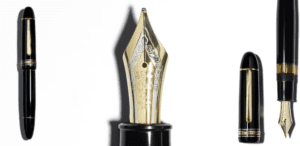
More specifically on the core Meisterstück pen, there is a series of DBAs that have been respected over 100 years. These design details help build distinctive memory structures that drive recognition, build meaning and help support a premium price.
- The black resin body
- The three gold rings on the cap, representing the trio of founders
- The unmistakable Meisterstück silhouette
- The number 4810 on the nib, referencing the height of Mont Blanc
5. Extend the core carefully
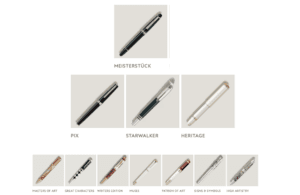
Montblanc shows how to used smart, tiered extensions of the core pen offer. First, and closer to the core, it has launched more contemporary interpretations of its iconic design codes. Collections like StarWalker take the core visual equities—the black lacquer, clean lines and that famous star—and rework them in a more modern way (below, middle). This keeps the brand up to date without losing what made it famous.
Montblanc has also extended further out and up in pricing into ultra-premium territory. Collections such as Great Characters and Masters of Art elevate the pen from a writing instrument to a cultural artefact (below, bottom). These pieces celebrate icons like Einstein or Van Gogh, combining storytelling with exceptional craftsmanship. The result? Products that don’t just write, but create meaning and collectability.
6. Create a vivid brand world
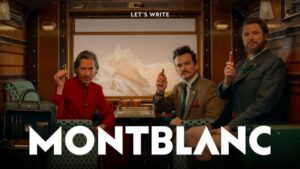
Montblanc has gone beyond products to create a rich and aspirational brand world. The “Let’s Write” campaign created with cult movie director Wes Anderson has rejuvenated the brand and given it cultural resonance. Wes delivers his signature cinematic style with perfectly symmetrical shots, pastel colour palettes and a slightly surreal sense of humour.
The films feature frequent Wes Anderson collaborators including Rupert Friend, Michael Cera and Waris Ahluwalia, playing eccentric travellers moving through a stylised world of trains, hotels and houses. The travel theme taps into a romantic, almost nostalgic view of writing—postcards, journals, letters sent from afar.
Montblanc has also brought its brand world to life physically with Montblanc Haus in Hamburg. This is much more than a corporate museum. It’s an immersive experience that celebrates the craft of writing, the history of the brand and the cultural role of the written word.
7. Stretch strategically
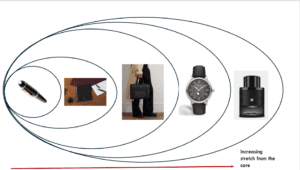
Montblanc is also a masterclass in disciplined brand stretch—the sort that builds both the brand and the business. Each move is linked to the core idea, builds the brand world and adds commercial value.
Stage 1: The stretch started close to the core, with products that directly enhance the writing experience: pen cases, notebooks and writing accessories. These don’t just add revenue, they make owning a Meisterstück more satisfying. More recently the brand went a step further with a custom designed desk.

Stage 2: From there, the brand has moved into leather goods like briefcases and travel bags. These connect naturally to the world of work and writing. They also leverage the brand attributes of craftsmanship and understated elegance.
Stage 3: The stretch then goes further. Watches bring in precision engineering and design, while still leveraging the brand’s distinctive visual assets.
Stage 4: Furthest out are fragrances that move the brand into a more emotional, lifestyle space.
8. Drive digital in a brand-led way
Montblanc has built a serious digital business whilst staying true to its core. Its own e-commerce site is now a meaningful revenue driver, generating a reported $136 million in online sales in 2025, with double-digit growth of 10–20% year-on-year (2).
Montblanc hasn’t gone down the route of hard-sell, transactional e-commerce. Instead, it has invested in “content-led” ecommerce, blending inspiration and shopping. For example, the brand has experimented in transforming existing social and brand videos into shoppable content curated into shoppable video playlists (3).
Importantly, digital growth works in tandem with physical retail. Like many luxury brands, Montblanc continues to invest in boutiques and experiential spaces, recognising that these stores build desire and immersion in the brand world.
In conclusion, the Montblanc brand is a textbook example of revitalising a heritage brand. A clear belief, a strong iconic core, distinctive brand assets and disciplined stretch combine to create both relevance and growth. Instead of chasing every new trend, the brand has doubled down on what made it famous, refreshing itslef for today with confidence and creativity.
Sources
