

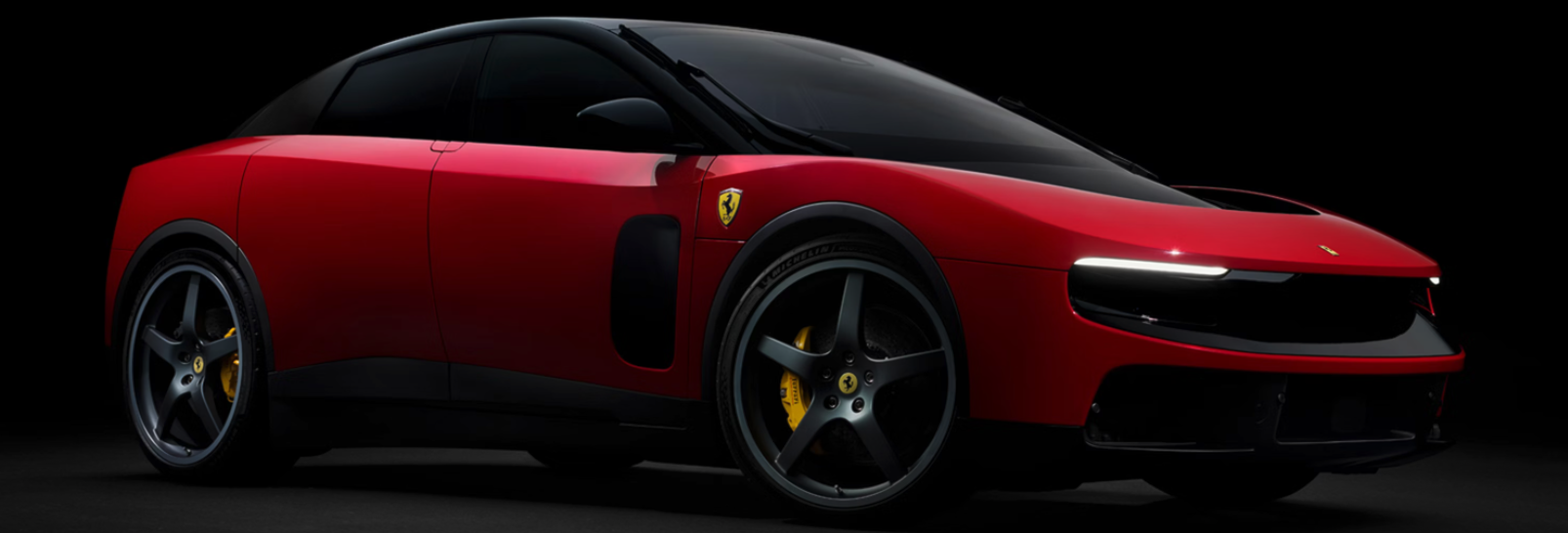
Last year, we posted on the controversial relaunch of Jaguar as an all-electric luxury brand. We suggested that the radical reinvention made the mistake of ditching distinctive brand assets. It was an effect a new brand launch not a brand revitalisation. Now Ferrari has launched its own controversial all-electric car, the Luce, as covered in a fantastic FT How to Spend It article (1). And the reaction has again been fierce. “If I had to say what I really think, I would be hurting Ferrari,” former Ferrari chairman Luca di Montezemolo told Italian media (2). “We’re risking the destruction of a legend, and I’m truly sorry about that.” Ow.
So, is Ferrari making the same mistake as Jaguar? Is this another example of a famous car brand forgetting what made it famous?
[Full disclosure. I’m biased. The Luce was designed by my two all-time favourite designers: Jony Ive of Apple fame and the less well-known, but equally brilliant, Marc Newson. Anyone on a Zoom call with me will see in the background my Biomega bike designed by Newson. Like the bike in New York’s Museum of Modern Art, mine is on display and has never been ridden!]
1. REMEMBER what made you famous
The biggest difference between Ferrari and Jaguar is remembering and respecting your “product DNA”.
Jaguar’s Copy Nothing campaign showed a futuristic fashion world of bold colours and striking characters. The car looked like something from the 1970’s cartoon sci-fi series Thunderbrids. But there was little connection back to Jaguar’s core product DNA of beauty, performance and British sporting luxury.
Ferrari’s Luce is very different. Yes, it is all-electric. Yes, the design is radical. But the Ferrari fundamentals of performance, luxury and drama are front and centre.
The performance numbers are impressive. The Luce accelerates from 0-100km/h in an astonishing 2.5 seconds. Using an anodised aluminium handle to engage “launch control” is “like hitting the hyperspace button in a spacecraft” in the words of the FT journalist (1). One massive electric motor for each wheel generates 1,000bhp for a top speed of 300kph.
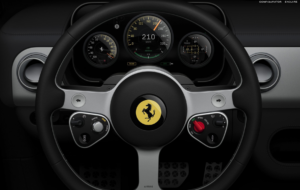
I also love the way Jony Ive has opted for features that “preserve and even reinvent the joy of driving” such as aluminium switches, as the FT explains (1). “I never understood why an electric power source automatically implies a digital interface. We risk losing some of the qualities we cherish in our classic Ferraris,” commented Ive. “We had to explore every possible way to create a visceral, physical connection with the interface.”
The luxury cues also remain strong. “The Poltrona Frau leather seats cry out to be palpated, the steering wheel urges you to caress it, and a huge, drilled pedal, references Ferrari’s racing beginnings.”
2. REFRESH what made you famous
Revitalisation is not about freezing a brand in the past. The challenge is to refresh what made you famous for today’s culture and tomorrow’s market.
Ferrari has done a better job than Jaguar with the Luce, I suggest. Jaguar’s relaunch felt like all freshness and not enough consistency. Indeed, the brief from JLR’s chief creative officer to the Jaguar design team was “Forget everything that went before.” (3)
Ferrari’s Luce, by contrast, is pushing the brand forward by refreshing recognisable Ferrari attributes of beauty, speed, exclusivity and desire.
In terms of freshness, there is, of course, the all-electric powertrain. But there is also a new design language. The car has a more minimalist, modern look than many traditional Ferraris. It is less obviously aggressive. Less shouty. More quiet luxury. The result is “an elegant vehicle that expresses the spirit of the brand in 2026,” as the FT article states (1).
3. Leverage distinctive brand assets
Jaguar’s ditched distinctive assets that made the brand famous. The leaping cat was killed off, replaced by a new geometric “J” symbol. The brand’s long-standing cues of British elegance and performance were replaced by a very different world of exuberant modernism.
This is a risk. Distinctive brand assets are not decoration. They are memory shortcuts that help people recognise the brand quickly and connect new activity to existing associations.
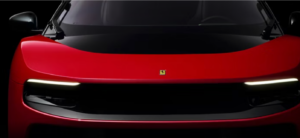
Ferrari has avoided this mistake. The Prancing Horse is not hidden. It has a heroic role. It is front and centre on the bonnet. It is on the centre of the steering wheel. And Ive and Newson have gone even further to activate and amplify the brand assets, as The FT describes with a lovely example. The key fob is a piece of glass the size of a matchbox, depicting the Prancing Horse on a yellow background. When pressed into a cavity in a glass console next to the “gear stick” e-ink is used to turn the glass key fob turn black and the yellow, with the light moving to the top of the gear stick.
4. Drive penetration by widening appeal
Ferrari’s current user base is 95% male and 5% female, with an average age of 52, according to the FT (1). That is a strong base, but also a narrow one. If Ferrari wants future growth, it needs to attract new users without alienating too many existing ones. And the Luce can help do this in several ways.
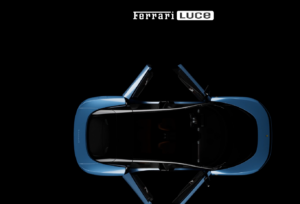
First, this is the first Ferrari with four doors (see below) and five seats. It can work better for families and passengers. Second, the electric powertrain opens the door to people who want a Ferrari but are also moving into electric mobility. Third, the design may appeal to buyers who find traditional supercars too loud, too aggressive or too show-off. The Luce has a more modern, less obviously macho form of desirability.
“If I’m a 25‑year‑old founder of a technology company, or interested in all energy‑related subjects, or compelled by things that are new and different – that whole world, far bigger than our current customers, might find it interesting,” summarises John Elkann, Ferrari’s chairman (1).
5. Avoid alienating current users
This is perhaps the biggest contrast with Jaguar.
Jaguar’s relaunch gave the impression of starting from scratch. The only link to the past was the name. Jaguars Managing Direction, Rawdon Glover said the relaunch “won’t appeal to 85% of the company’s existing customers” (3). Whilst any new design will not be loved by all current users, pissing off 85% of them seems a bit extreme!
Ferrari’s Luce will not be loved by all purists. Some people will hate the idea of an electric Ferrari on principle. Others will reject the minimalist design language. But Ferrari is not alienating its core customer base in the same way, I suggest. As described above, the Luce strikes a better balance of freshness and consistency. It’s a revitalisation rather than a reinvention. And another major difference is the brand still has petrol models for now.
The Luce gives future-facing buyers a new way into the brand, whilst allowing traditional fans to keep loving Ferrari.
In conclusion, Ferrari’s Luce is a better example of brand revitalisation than Jaguar’s radical relaunch. It is controversial but does a stronger job of balancing freshness and consistency: respecting product DNA, refreshing the brand for an electric future and giving the distinctive brand assets a powerful role.
Ferrari is not simply copying the past, but nor is it deleting it.
Sources:
