


The Indian cola market is fizzing. Despite rising concerns about sugar, the category has been growing strongly over the last three years, with value CAGR of around 12-15%. This growth is being fuelled by a heady mix of rising disposable income, hotter weather, urban lifestyles, quick commerce, eating out and QSR growth, premiumisation and, of course, India’s youthful demographics.
But health concerns are changing what people expect from the category. Consumers still want the refreshment and an emotional hit. But increasingly, they also want less guilt: zero or reduced sugar, more natural ingredients and, in some cases, functional or premium cues.
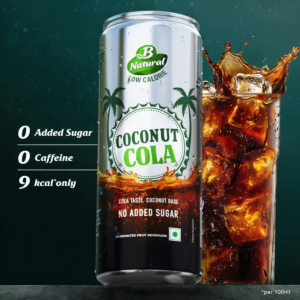
This is the context for ITC’s launch of BNatural Coconut Cola: a sugar-free drink made with tender coconut water, priced at ₹60 for a 250ml can, around 50% above Coke Zero. This is not a classic cola launch based on distribution, advertising muscle or price. It is an attempt to create a premium, “better-for-you” cola space.
Will it work? Too early to say. But the launch does offer some useful lessons for any brand trying to create a new premium challenger brand in a crowded category.
Post by Prasad Narasimhan, Managing Partner based in Bangalore India.
1. Find a strategic opening in the market
Good challenger innovation starts by finding tension in the category. In cola, the tension is clear. People love the taste, refreshment and ritual of cola. But they are increasingly uneasy about sugar, artificiality and “unhealthy” ingredients. This creates an opportunity for a brand that can offer cola pleasure with more permission.
Coconut water helps here because it carries strong “health permission” in India. It is associated with hydration, electrolytes, naturalness, freshness and tropical authenticity. These are helpful associations in a category often seen as artificial and indulgent.
This is the same broad territory that helped Coke Zero grow: don’t ask people to give up cola, give them a more permissible way to enjoy it.
The opportunity is also helped by premiumisation. Indian consumers are increasingly choosing on more than price alone: nostalgia, health, functionality, craft and experience all now matter. This creates room for a ₹60 can, but only if the experience feels genuinely different.
2. Be clear on the job the brand performs
Consumers don’t really buy categories. They buy “jobs to be done”
This is where Coconut Cola has a big challenge. Coke, Pepsi and Thums Up already have clear equities. Campa is aggressively building a “value cola” position. Coconut water has a natural role in hydration.
So what exactly is Coconut Cola? Is it a cola? A coconut drink? A healthy soft drink? A premium refreshment? A mid-afternoon lift? A café-style indulgence?
The answer needs to be sharp. If not, repeat purchase will be hard.
Successful global launches show the value of clarity. Coke Zero did not ask people to abandon cola. It promised Coke taste with less guilt. Liquid Death did not win by being just another water; it created a distinctive beverage identity. Poppi did not compete head-on with cola; it created a more modern fruit soda space.
The danger is falling between stools. Some botanical colas and coconut-infused colas launched globally over the last decade have struggled because they were not indulgent enough to satisfy cola drinkers, and not healthy enough to win health seekers.
3. Make taste the hero
No amount of branding can save a disappointing drink. This is especially true in beverages, where repeat purchase is driven overwhelmingly by taste. People may try Coconut Cola once because it sounds interesting. But they will only come back if the taste delivers.
The product still needs to taste like cola. Consumers will forgive unusual. They will not forgive mediocre. So this means coconut should elevate the cola experience, not dominate it. Think of coconut as the signature note, not the whole song.
For ITC, the big product challenge is to make Coconut Cola feel like a better cola, not a compromised cola. Premium, natural and crafted are attractive cues. But if the drink feels like a diluted cola with coconut flavouring, the proposition will lose power fast.
4. Own a specific occasion before trying to scale
One of the biggest mistakes in innovation is trying to be for everyone, everywhere, straight away.
Coconut Cola is unlikely to beat Coke, Pepsi or Thums Up across every cola occasion. It doesn’t need to. The smarter move is to own a specific occasion where the product has a more natural role.
The success of challenger brands like Teh Botol Sosro in Indonesia shows the value of owning an occasion rather than fighting across the whole category. For Coconut Cola, possible occasions could include:
- A post-lunch or mid-afternoon reset
- Office refreshment
- A premium café accompaniment
- A quick-commerce treat
- A guilt-reduced evening indulgence
This also helps sharpen the job to be done. “Better-for-you cola” is a promising idea, but still broad. “The refreshing post-lunch lift” or “the premium office cola” gives the brand more focus.
5. Scale in stages
Brand-led growth needs clever staging. Start by creating curiosity. Then build repeat. Then deepen differentiation. Then, and only then, think about extending the platform.
A possible staircase could be:
Year 1: create curiosity, driving trial and social conversation.
Year 2: build repeat, growing household penetration and starting to own an occasion.
Year 3: deepen differentiation, building the space of premium better-for-you cola and developing strong distinctive brand assets.
Years 4-5: extend the platform into areas like citrus cola or spiced cola, while keeping Coconut Cola as the flagship.
In conclusion
In conclusion, ITC’s Coconut Cola is an interesting attempt to redefine what cola can be for a new generation of Indian consumers: more premium, more permissible and more distinctive. The key will be to avoid a head-on fight with Coke, Pepsi and Thums Up, and instead create a focused new space by winning on taste, owning a clear occasion and building a brand world in stages.
We’ll do an update on progress in a year or so, to see if they have applied the principles from this post!
