

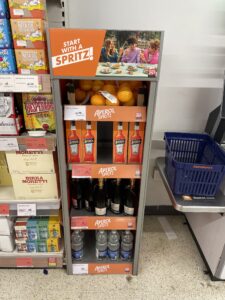
Sometimes, smart marketing is not a big new ad campaign, a new product a purpose-led manifesto. Take as example the secondary display by Aperol I saw in my Sainsbury’s store this week. In one compact unit, the brand brings together everything needed for an Aperol Spritz: Aperol, oranges, prosecco and soda water. The banner says “Start with a Spritz”, with an image of friends sharing Aperol and drinks in the sunshine taken from their comms campaign.
Simple? Yes.
Strategically smart? Also yes!
Here’s what brand builders can learn from it.
1. Drive reach with secondary display
Brands have to fight for attention in their own category fixtures. This is a tough place to win. Shoppers are often on autopilot, moving quickly through the aisle, buying the brands they already know or products they planned to buy.
Aperol’s secondary display creates a new brand moment in a different part of the store. Rather than waiting to be found on the spirits shelf, Aperol turns up as a complete occasion solution. The display gives Aperol a fresh opportunity to be seen by shoppers who might otherwise walk straight past the drinks aisle or skip over the brand on shelf. This helps drive reach which is the key to core brand growth.
2. Build a branded ritual
Aperol is not just selling a product. It is also selling a way of drinking the product. For regular Aperol drinkers, the spritz serve is obvious. For less frequent drinkers or non-drinkers of the brand, it may not be. They might have seen the bright orange drink in a bar or on holiday, but not know exactly what goes into it. Or they might like the idea, but feel unsure about how to recreate it at home.
This display tackles that barrier head on. It raises awareness of the Aperol Spritz as the key serve by showing the ingredients together. The brand is presented as part of a simple, social drinking ritual.
This approach has some emotional “sizzle” through showing the sunny, sociable world of Aperol: friends, sharing food, bright colours and relaxed enjoyment. But it also has some product “sausage” by showing the practical recipe: Aperol, prosecco, soda water and oranges. .
3. Reduce friction to sell more stuff
The best shopper marketing removes small barriers that stop people buying. The Aperol display does this brilliantly. For someone who already knows and likes an Aperol Spritz, the display makes the shop easier. No need to find Aperol in one aisle, prosecco in another, soda water somewhere else and oranges in fresh produce. Everything is together.
That matters because even small bits of friction can kill a purchase. A shopper might think: “I’ll make Aperol Spritzes this weekend.” Then they realise they need several ingredients, spread across the store. They forget one. They can’t find another. They decide it is too much hassle and buy something simpler. Aperol’s display solves this problem by turning a multi-step shop into a one-stop shop.
This is brand-led growth in action: making the brand easier to buy and easier to use. It’s not just creating desire. It’s converting that desire into purchase.
4. Use distinctive brand assets to create instant recognition
The display makes strong use of distinctive brand assets. The bright orange colour and Aperol bottle are working together across the unit. The Aperol bottle is placed in a central position on the shelf, making the brand easy to spot and easy to decode. You don’t need to study the display to understand the brand. You get it in a second.
That matters in retail, where shoppers are busy and attention is precious. The role of the display is not to explain every detail. It is to create instant recognition and trigger desire.
5. Make it easy for retailers to say yes
Another strength of this display is how it gives the retailer a clear, commercial reason to support the brand.
Retailers want displays that drive sales, not just decorate the store and push the brand. Aperol’s unit offers a simple occasion-led solution that can sell several products together. It creates a mini destination in store, especially relevant for summer, weekends and social occasions.
That makes the display a stronger proposition than a standard branded display selling only one product. It’s not just taking space, it’s creating a shopper solution.
For brand teams, this is a useful reminder. When developing shopper activation, think about the retailer’s needs as well as the consumer’s needs.
In conclusion, Aperol’s secondary display creates extra reach, teaches the signature serve and removes friction from the buying journey. It shows how to make life easier for consumers and retailers whilst also building your brand.
To explore the Aperol brand in more detail, see this earlier post.
