

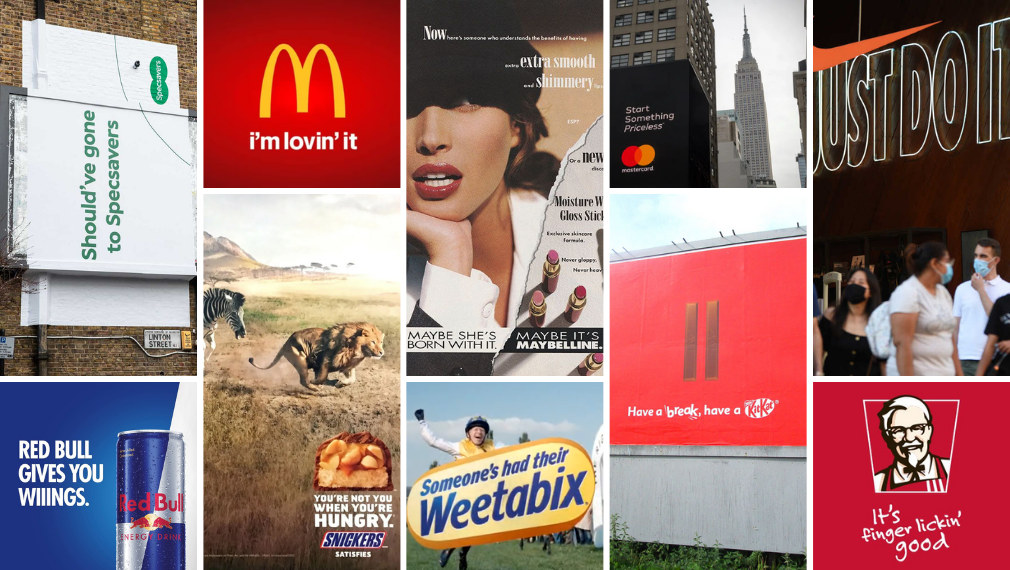
Taglines are a key form of Distinctive Brand Assets. The strongest – “Just Do It”, “I’m Lovin’ It”, “Have a Break” – act like instant mental shortcuts, with the line triggering the brand name AND brand meaning in a heartbeat. But for every iconic tagline, hundreds that quietly disappear without ever earning a place in our memories. But what separates the famous from the forgettable?
We now have some good guidelines, thanks to research by our friends at brandgym partner agency Distinctive BAT. They ran a meta-analysis of 500+ tested taglines across categories and markets. The study examined differences in BAT scores (Asset Recognition + Brand Attribution – Misattribution) using multiple variables (e.g. word count, use of brand name).
Here are some headlines from the research.
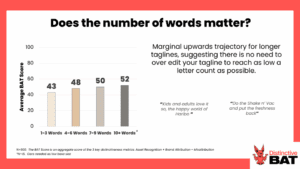
1. DON’T REJECT LONGER LINES
Conventional wisdom might suggest that taglines should be short, punchy and “snappy”. However, Distinctive BAT’s data told a different story. Longer lines (within reason) scored slightly higher than ultra-concise ones.
Why? Because a few extra words help add texture that aids memory encoding.
This doesn’t mean adding words for the sake of it. But it does mean not strangling a powerful idea in pursuit of brevity.
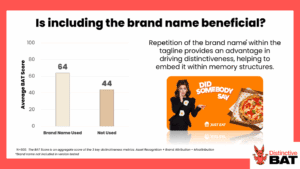
2. USE YOUR BRAND NAME TO GET AN UPLIFT
Any time you can get the brand name into the line, you help “bake in” attribution.
In addition to helping improve the chances of the tagline sticking, mentioning the brand name further aids brand linkage to advertising.
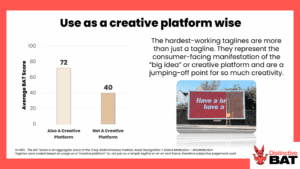
3. TURN YOUR TAGLINES INTO A “CREATIVE PLATFORM”
In many cases, a tagline is just slapped on the end frame of an ad.
The analysis confirmed a key principle we’ve always used on brandgym projects: there are big benefits from using a tagline as a creative platform, not just a sign-off.
When a tagline becomes the north star for your whole brad mix, it:
-
Anchors multiple campaign ideas in what we call a “brand chapter plan”
-
Drives “fresh consistency” across executions
-
Boosts memory through multi-channel repetition
KitKat is the gold standard. “Have a Break” isn’t just a line. It is the creative idea—driving decades of memorable campaigns. Another example we posted on recently is the Metropolitan brand of insurance in South Africa. After years of using “Together We Can” as a simple final frame sign-off, it is now driving the whole mix, including the Metropolitan Collective Shapers activation campaign.
4. HARNESS JINGLES: THE UNDERUSED SUPERPOWER
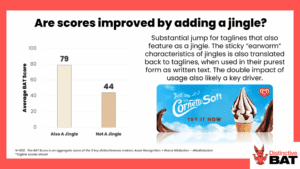
We’ve posted before on the potential of sonic branding, an under-used form of distinctive brand asset, using the re-launch of the Cornetto jingle as an example. And the study showed a substantial leap in distinctiveness for lines that also exist as jingles.
Why this outsized effect? Jingles have the effect to turbo-charge memory structure creation by making a tagline a multi-sensory device.
Jingles can be liked down at and seen as uncool. But the data shows they’re one of the most cost-effective distinctive asset builders around.
5. DRIVE FRESH CONSISTENCY OVER TIME
Many brands abandon taglines early because of changing CMOs or the lure of “newness”.
However, the longer a tagline is used, the stronger it becomes. Consistent use of time helps embed the tagline in memory structures. The average BAT score for a tagline used for 1-2 years is 39, growing to 57 for 11-20 years and almost doubling to 71 for 21 years+.
The trick here is to go beyond mindless repetition and drive “fresh consistency”, refreshing the creative platform to stay interesting and culturally relevant. The recent Kit Kat campaign we posted on here is a great example, tapping into a current issue around workplace stress.

6. WHICH FEATURES MATTER MOST?
Regression modelling by Distinctive BAT helped highlight which of the above factors made the biggest difference to distinctiveness scores. The key success factor is to transform your tagline into a creative platform and use this consistently over time.
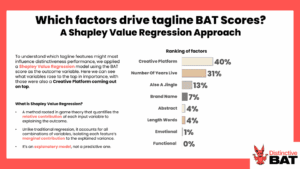
In conclusion, this new study confirms that fresh consistency is key to driving brand distinctiveness, both over the mix (creative platform) and over time. Taglines that truly shift mental availability are the ones treated not slapped at the end of an ad as a sign-off, but as a strategic asset.
SOURCES
