

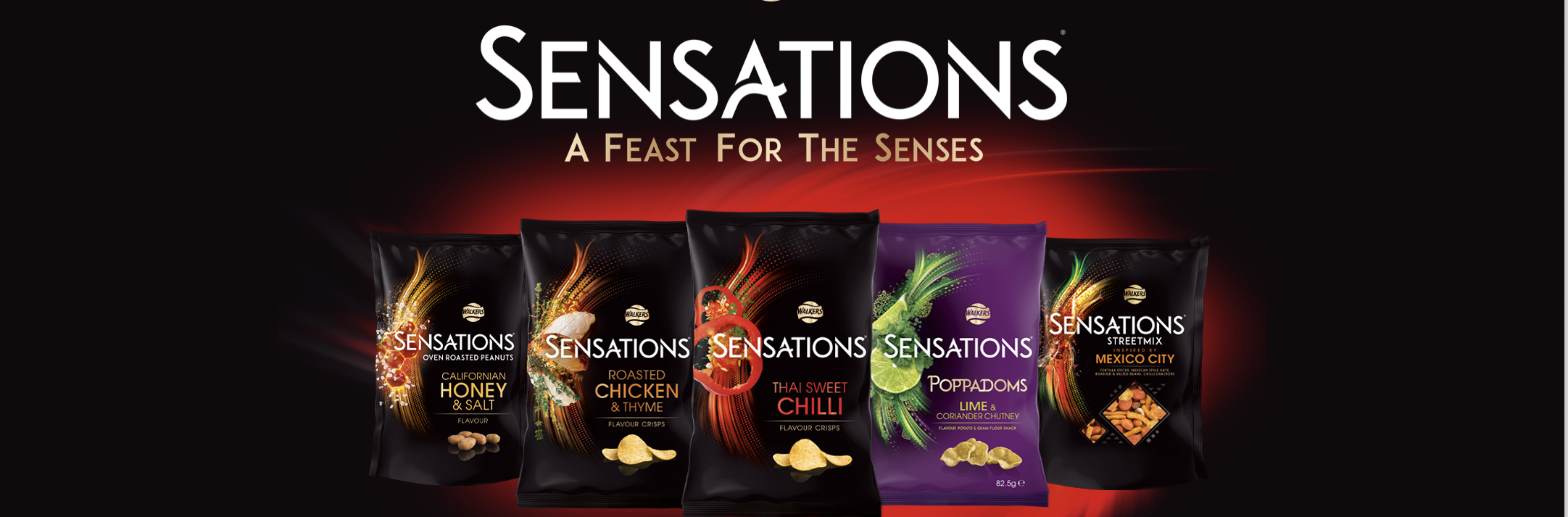
Post by Jon Goldstone, Managing Partner
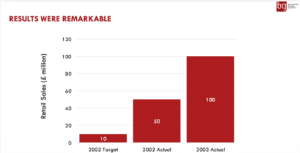
What was it that made it such a successful launch, with actual revenue 5x the target, building a £100million business by the end of year 1? I believe that there were five key success factors that can be applied to any innovation.
1. Be Profit Accretive
I believe that this was the single most important success factor. Unlike many new product business cases which offer flaky promises of profitability 3-years down the road, Walkers Sensations was very profitable from day 1.
A combination of spare capacity, very low capital requirement, premium pricing and modest cost of goods allowed us to offer our retail customers good margins and heavily incentivise the sales team. In a business where ‘nothing happens until someone sells something’ there was tremendous power in a sales team who were desperate to sell our new product and customers who were desperate to back it!
2. Be Fluent
I’m a great admirer of System 1’s theory of “fluent innovation”. They have proven that most successful launches are 80% familiar and 20% new. This is an example of what we at the brandgym call delivering “fresh consistency”.
There was much that was familiar about Walkers Sensations. It had strong endorsement from the Walkers master-brand and was launched as part of the long-standing ‘No More Mr Nice Guy’ campaign featuring Gary Lineker.
The fresh new elements were the large bag format, the slightly thicker cut and crunchier crisps and the slightly more indulgent than usual seasonings, like Thai Sweet Chilli.
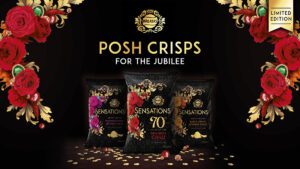
This whole proposition was bundled up as ‘Posh Crisps from Walkers’. This was incredibly easy to understand and highly persuasive to the 70% of the population who loved to eat Walkers Crisps with their sandwich at lunchtime but found “special” crisps like Kettle Chips too hard, too greasy, too expensive and too pretentious. It was also easy to understand for the agency, with Posh Spice (aka Victoria Beckham) used in the brief and in the actual launch ad too!
3. Have a Clear Source of Business
As we explored the concept of a posh crisp from Walkers we were aware that we needed to target a new consumption occasion, in order to be incremental to the already very broad Walkers range.
Our big insight was understanding the emergence of ‘me time’. This was a sweetspot moment of the day when young parents had taken their kids to bed, settled down in front of the TV and poured themselves a glass of wine. We positioned ourselves as the perfect snack to accompany that glass of wine.
‘Me time’ represented quite a cultural shift. Traditionally this occasion was dominated by hot drinks and sweet treats. Whilst Walkers Sensations grew well beyond the ‘young parents’ target audience and ‘me time’ target occasion it gave us the focus that we needed to give the brand a very clear identity right from the start.
And it did deliver very high levels of incrementality. Almost all the early volume was sourced from sweet treats like biscuits, cake and ice cream.
4. Keep the Fly Wheel Spinning
When I joined Walkers I was one of many who was given the ‘Good to Great’ book by our boss, Martin Glenn. The Walkers business was already on a roll at this time, but Martin wanted all of us to realise how precious this momentum was and how much effort it would take to keep the fly wheel of growth spinning.
Luckily, Walkers Sensation was born into this business culture. As soon as it showed signs of being something big, the business threw itself behind it. There was a real commitment that this wouldn’t be a one hit wonder.
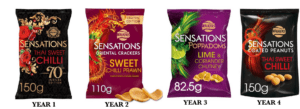
The R&D team worked wonders to bring two major brand extensions (Oriental Crackers and Poppadums) to market in record time and the board willingly invested the additional profits back into media investment.
Instead of moving onto the next big thing, we made sure that this big thing could be as successful as possible and stick around beyond the life of most innovations.
5. Make Difficult Choices
As soon it was obvious that Walkers Sensations was a hit we started to get requests from the sales team. The first was to start to offer price promotions. And the second was to launch the popular Thai Sweet Chilli variant into small bags.
We had deliberately launched at full revenue and lasted 18-months before we eventually succumbed to the first big promotion. We were trying to establish a new premium mainstream proposition and it seemed wrong to offer discounts. This forced us to get creative, finding many new ways to drive trial and achieve off-shelf displays without resorting to price.
It was the same with the small bag. We were trying to establish a new evening sharing occasion and small bags would have diluted the proposition. We eventually got pragmatic and went for it, but that first 18-months or so when we were only available in large sharing packs really helped to establish the proposition.
In conclusion, much of what we did in the Walkers Sensations launch may seem simple. But the key principles of brand-led growth are simple. Successful launches demand that you apply these principles with excellent execution, energy and consistency.
