

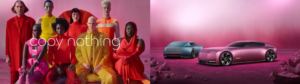
I was critical of Jaguar’s controversial 2024 relaunch. The surreal “Copy Nothing” communication campaign featured models in a range of bizarre and brightly coloured outfits without a car in sight. And the Type 00 concept car unveiled in Miami was radically futuristic and coloured neon pink (see below).
I suggested at the time that Jaguar had got the balance of freshness and consistency wrong, ditching all of its distinctive brand assets. However, I did say, “The key factor that will determine success or failure is of course the product itself. And we will have to wait until 2026 or later to see what cars come off the production line.” So, I watched with great interest the unveiling of the new Type 01 car this week. Jaguar’s new electric car was launched in New York on Tuesday night, marking the culmination of a two-year relaunch that has been one of the most scrutinised in automotive history. Starting at around £130,000 ($172,000), is aimed firmly at the luxury end of the market.
Below I explain why the real relaunch strikes a much better balance of freshness and consistency than the 2024 campaign. I also raise several important questions that remain about the brand strategy.
REASONS TO BE POSITIVE
1. The car itself is less radical
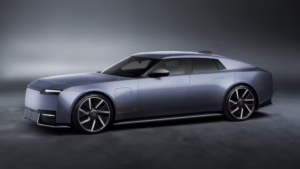
Type 01 is clearly a distinctive-looking car. But, as you would expect, it is less radical than the Type 00 prototype shown in 2024. Take the colours. The so called “Barbie pink” is nowhere to be seen. Instead, the colour options are much safer, including black, silver, blue and copper. Second, the body lines are still striking but the proportions are more balanced. And, in a nod perhaps to a target audience that is older than the one suggested by the 2024 relaunch, the car has four doors rather than two. This feels like a sensible shift. The Type 00 concept car was designed to shock and attract attention. Type 01 has the much harder job of persuading people to part with £130,000 of real money.
2. Distinctive assets have been refreshed, not ditched
Jaguar talks about its new era being expressed through a set of powerful “symbols of change”. Two of these are new. The logo, or “Artist’s Mark” as the company calls it, is the same one unveiled in 2024. It incorporates the “J” and “r” from opposite ends of the Jaguar name (below left). I was critical of ditching the original leaping cat as the main logo. But, on the positive side, the simpler, round and symmetrical new logo works well in social media and, for example, on the hubcaps. The “Strikethrough” of bold linear lines is set to become a universal Jaguar design code and a symbol that signifies a “deletion of ordinary” (below middle). The most obvious examples on Type 01 are the front grille and rear of the car.
What is most interesting to me is the return of the famous leaping cat symbol, or “Leaper”, which was noticeably absent from the 2024 relaunch. Jaguar now calls this the “Maker’s Mark”. In a direct echo of our concept of fresh consistency, Jaguar describes the symbol as representing “Past and future aligned.” I also like the idea of the Leaper being used as “a hallmark of provenance and excellence, and a trusted signifier of completed work.”
This feels like a much better balance: create new distinctive assets, but refresh and reuse valuable existing ones rather than ditching everything that made you famous.

3. More mainstream communication
The 2024 brand slogan, “Copy Nothing”, remains. However, JLR has parted ways with the agency behind the original rebranding campaign and the communication around Type 01 is much more mainstream.
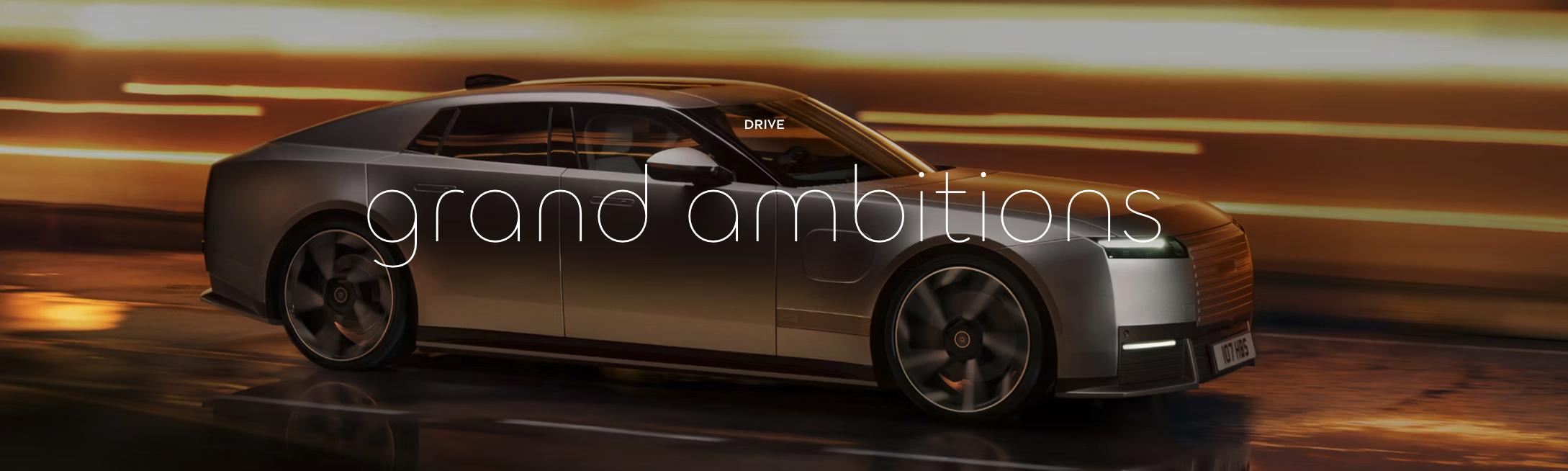
Gone are the strange aliens. In comes car performance, aspirational imagery of the car driving in the city at night and much more reference to the product innovation in the new Jaguar. This is another welcome shift. The 2024 launch had plenty of emotional “sizzle”, but almost no product “sausage”. Now we finally have both.

4. Building on British heritage
Any meaningful reference to the brand’s British heritage was absent from the 2024 relaunch. Now it is front and centre. “British creativity has a long legacy of blazing trails. Look at David Bowie, Vivienne Westwood, Richard Rogers. And we celebrate a new generation of visionaries who challenge convention,” says the Jaguar website. It is noteworthy that the icons Jaguar chooses to mention are all of a certain age, rather than young upstarts. This feels like another sign that the real relaunch is reconnecting with some of the brand’s roots rather than trying quite so hard to reject the past.
And the Britishness goes beyond communication. Type 01 has been designed and engineered in Britain and will be manufactured at JLR’s Solihull plant.
5. Product DNA partially respected
Jaguar’s product heritage was also missing in 2024. There was little attempt to link past, present and future. Indeed, there were no cars at all in the launch communication. Today, the brand’s product heritage plays a leading role. “1948 saw the creation of the legendary XK120, the world’s fastest production car at the time,” states the website (1). “In 1961 the iconic E-type was born, a look so effortlessly sleek and dramatic that Enzo Ferrari christened it ‘the most beautiful car in the world’.”
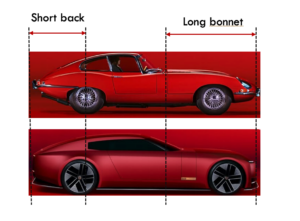
We can see some of this product DNA coming through in Type 01, with its elongated bonnet and short rear. However, the beautiful curves of the E-type are nowhere to be seen, replaced by harsh, angular lines more reminiscent of the Tesla Cybertruck. “Looks like a Cybertruck and a Bentley Continental had an illegitimate child,” is how one Facebook user described Type 01 (2)!
Type 01 is definitely different. But is it really “unmistakably Jaguar”, as the company claims? I’m not so sure.
6. Performance delivered
Product performance was totally absent from the 2024 campaign. Fast forward to today and we see another example of Jaguar delivering fresh consistency. A huge dose of freshness comes from being all-electric. “The ‘zero’ is symbolic of zero tailpipe emissions,” says the brand. The consistency comes from sports performance. Type 01 is the most powerful and aerodynamic Jaguar road car ever. Its tri-motor all-wheel-drive system produces more than 1,000 horsepower, helping the car accelerate from 0–62mph in just 3.2 seconds. There is plenty of innovation too. An intelligent deployable rear spoiler is hidden at lower speeds before deploying to reduce lift and generate downforce at higher speeds, for example. Jaguar has also filed hundreds of patent applications relating to the new car.
This is perhaps the most encouraging example of fresh consistency in the whole relaunch: radically new electric technology delivering something deeply consistent with Jaguar’s history of high-performance cars.
7. Social media traction
Jaguar has already amassed an impressive Instagram following of more than 16 million, despite having only 50 posts on the relaunched account. The brand has already surpassed Aston Martin in terms of followers (12.4 million) and is half way to catching Ferrari (32 million). So, the brand has certainly succeeded in attracting attention and creating social buzz. This matters. The radical relaunch has got people talking about Jaguar again after years when the brand had struggled for relevance. “The badge, which was once an intrinsic part of Swinging Sixties British cool, had lost its lustre,” as BBC News observed (2).
However, social media followers don’t necessarily translate into luxury car buyers. There is still a question about whether the younger audience attracted by the relaunch is actually in the market for a six-figure luxury car. Which brings us to the bigger questions that remain.
QUESTIONS THAT REMAIN
1. What is the sales ambition?
A favourite brandgym phrase is “follow the money”. And I can’t find any mention of the sales ambition for Type 01. What does success actually look like? How many cars does Jaguar expect to sell? What share of the luxury market does it need to achieve? A brand relaunch ultimately needs to do more than generate attention, Instagram followers and design debate. The objective of marketing is ultimately to sell more stuff.
2. Who IS the target audience?
I still question Jaguar’s apparent strategy of being so radical that they actively turn off loyal Jaguar fans, rather than taking more of them on the journey. Jaguar managing director Rawdon Glover previously referred to the existing customer base disparagingly as a “shrinking and ageing” one made up of “men in their 50s” (3). This is strange, given that men in their 50s are a key demographic for him: 69% of luxury car buyers are over the age of 35 (4). F1rst Motors shared my concern with this approach. “A reinvention so completely divorced from the company’s heritage, that executives are cheerfully admitting 85% of their customers will flee like passengers abandoning a sinking ship,” they reported (4).
The strategy seems to be to target younger, affluent buyers. However, as F1rst Motors goes on to explain, “The target demographic of ‘younger, progressive’ buyers with six-figure budgets represents a remarkably narrow market.” Jaguar seem to hope that the answer will come from across the Atlantic. Type 01 “is aimed squarely at rich tech industry buyers driving the wide open roads of America,” according to the Guardian (3). That certainly sounds like a clearer target. But it remains a relatively small one.
3. Is the design still too polarising?
Whether the car is attractive or not is, of course, a highly subjective question! “The long bonnet. The low profile. The monolithic presence. Only our pioneering new body architecture could spark proportions and a drive as captivating as this,” is how Jaguar describes Type 01 (1). Car journalist Steve Fowler shared this enthusiasm, saying Type 01 looked “incredible” and made him “proud to be British”, according to the BBC (2). However, the same article reported luxury car consultant Craig Kinnersley describing the new design as an “unmitigated catastrophe” that looked like a hearse and lacked any “memorable Jaguar flourish”! And on a practical note for potential UK buyers, Type 01 is so long that it won’t fit into a standard UK parking space, according to the Guardian!
There is nothing wrong with being polarising. Indeed, distinctiveness requires you to stand out rather than blend into the category. But there is a difference between being distinctive and being actively disliked by too many potential buyers.
4. Is the value proposition compelling enough?
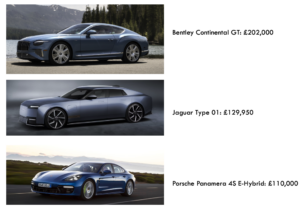
The entry-level Type 01 is priced at around £130,000. This is clearly a lot of money, although it puts Jaguar below some of the ultra-luxury GTs it appears designed to compete with. Compared with the most obvious four-door premium performance competitors, however, the value proposition becomes more challenging. The Porsche Panamera 4S E-Hybrid, for example, starts significantly below Type 01 at around £110,000.
You do get a lot of extra power and performance for the additional spend with the Jaguar. But at this price, buyers aren’t simply comparing horsepower. Jaguar is asking customers to buy into a newly repositioned luxury brand against competitors with decades of established premium credentials.
And that leads to perhaps the biggest question of all: will the radical brand relaunch create enough desire to seduce Porsche, Bentley and other luxury-car buyers into switching to Jaguar?
In conclusion
In conclusion, Jaguar’s launch of the Type 01 strikes a significantly better balance between freshness and consistency than the 2024 campaign. The production car launch combines a big dose of freshness but more of what made Jaguar famous: the Leaper, British provenance, product heritage and serious performance. However, the ultimate test is commercial: can all the attention, distinctiveness and innovation persuade enough people to spend £130,000+ on a Jaguar? We’ll check back in 12 months to report on progress, although without a clear sales ambition judging success will be hard!
SOURCES
(1) Type 01 launch
(2) BBC report
(3) Guardian article
(5) F1rst Motors
