


The challenge of leading a global brand team is the focus of several brandgym projects at the moment. I’ve seen how tough the challenge of doing this can be. But I’ve also seen the huge benefits of global leadership when done well.
Below I share a framework we use to help global brand directors. This is based on research with global marketing teams and our project experience. The four key parts to the framework are ‘Organisational Structure’, ‘Head’ (results-focus, follow the money), ‘Heart’ (inspiring vision) and ‘Hands’ (creating global ‘assets’).
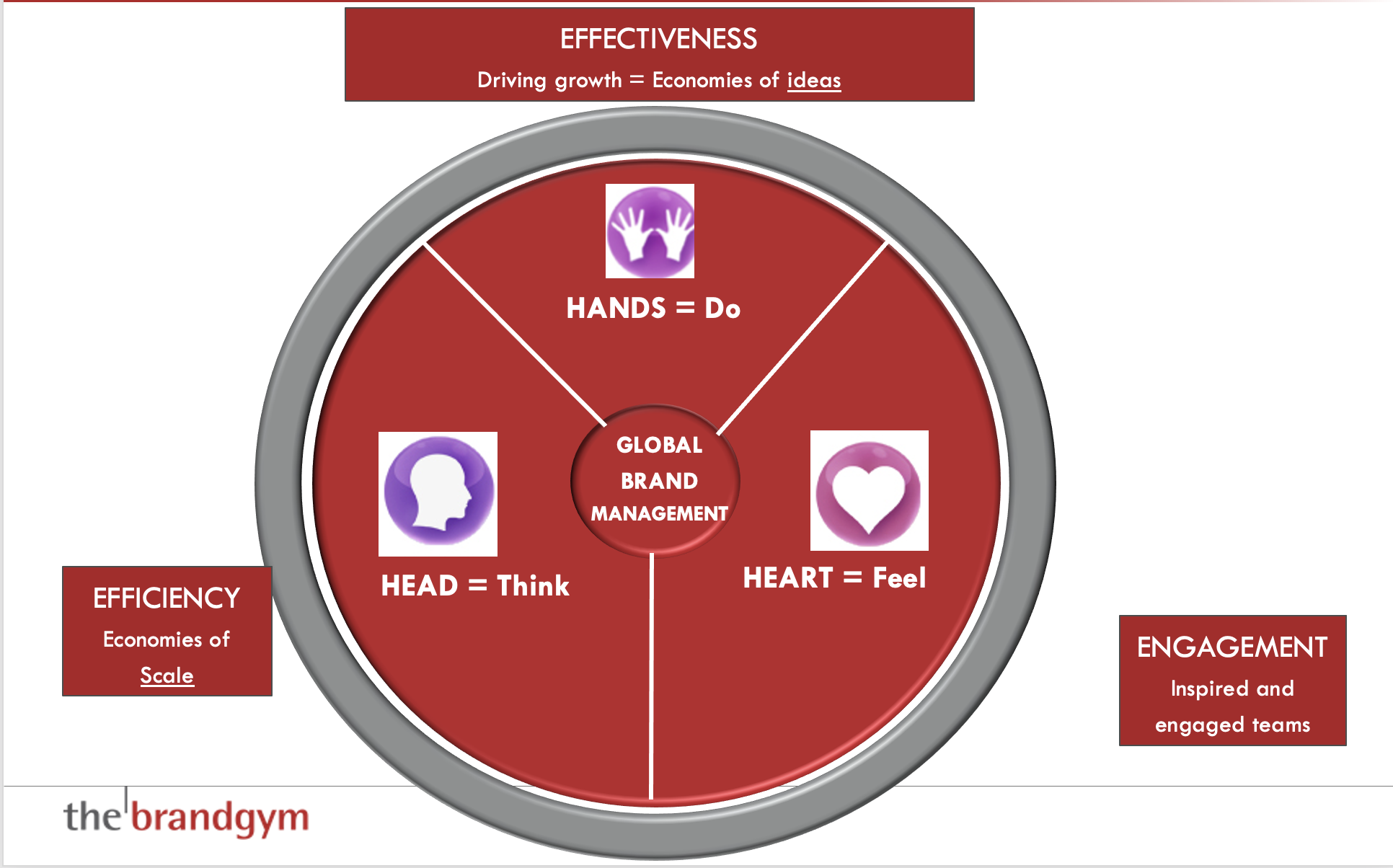
1. Organisational structure
Global brand directors need ‘clout’ (power to influence people) to make things happen and ‘sanctions’ to use when regions don’t stick to the global strategy. Here, the most effective global brand directors work closely with senior management up to CEO level to get their backing and support. Carol Welch, when Global Marketing Director of Costa Coffee, talked about the CEO’s critical role in pushing regional directors to implement global initiatives and not ‘back out’.
In addition, we recommend that people taking on global roles campaign to get as much resource as possible in three areas:
Global brand management budget
Push to secure as much funding as possible, to be able to carry out some sort of global activity or at least global research.
Global brand management team
Push to get a proper team. Work on expanding this to fill in key roles as you demonstrate results.
Global brand management unique tools
Design and create unique tools or processes that are important to the organisation. For example, this could be a creating a global brand equity tracking tool that is used across regions and used to identify issues and opportunities
2. Head = show them the money
One risk with global branding is to fall into the trap of ‘brand bureaucracy’, where the emphasis is on ‘policing’ regions to comply to a set of global brand guidelines. Instead, global brand directors should anchor their work on driving growth in the regions. The ambition should be to demonstrate how global brand strategy can deliver growth that the regions couldn’t create by working alone.
A consistent way of measuring global brand and marketing initiatives is key to this approach. Having different research methods in different regions is a way to maintain ‘brand anarchy’, where local teams do their own testing with a different methodology and say, ‘Look, it doesn’t work here!”
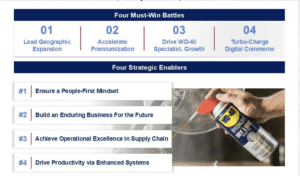
The most impressive example I’ve seen of this approach is WD-40 Company. Their four “Global Must Win Battles” are presented externally to shareholders and reported on. Internally, there is alignment from global to regional and country levels on these priorities. Most impressive is the fact that individual team members see a clear role in delivering the goals, as shown by internal research.
3. Heart = inspiring vision
The most effective global brand directors create an inspiring brand vision that regions want to sign up to, rather than being forced to accept. Of course, the initial reaction of regional teams at the start of a global branding project may be doubts concerning its suitability “for our market”‘. But we have seen first hand how a carefully designed project can take a global team on a ‘journey’ to co-create a compelling global brand vision.
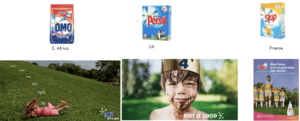
For example, we worked with the global brand director of Unilever’s ‘Top Clean’ brands to help on a new global brand vision. Top Clean was the internal name for a group of laundry cleaning brands including Skip, Persil and Omo. This set of brands had a hotch-potch of different product formulas, pack designs and ad campaigns. Immersive insight into consumer needs across the world threw up a powerful insight that was to be the catalyst for a successful and long running campaign you may have heard of: ‘Dirt is good’ (DIG). Our approach was not to try and ‘patch together’ the multiple local positionings; this risked ending up with a ‘lowest common denominator’ solution.
Rather, we projected the team into a future and then worked back to the ‘transition path’ for each region. The brand is now called internally ‘DIG’. The global brand vision led to harmonised and more effective pack design, product formulations, communication and activation (see below).
4. Hands = global assets
The final and perhaps most important success factor for global brand management is to go beyond brand positioning to create ‘assets’ that can be amplified regionally. These are tangible marketing mix ideas that local markets can adapt locally. For example, the Lays brand team have created and rolled out an impactful brand activation called No Lays No Game. This campaign is now run for several years and has grown into a truly impressive global campaign.
We call this approach of creating and housing brand assets for local team to adapt ‘The Marketing Shop’, as covered in this post here.
In conclusion, an approach covering head, heart and hands increases the chances of global brand leadership being effective. It’s not an overnight job. It takes several years to move regional teams from agreeing rationally, to buying in emotionally and finally changing behaviour. But the benefits of persisting are huge, both for the company and the global brand director.
