

Much of marketing today focuses on the lower part of the sales funnel, using “performance marketing” tactics like search engine marketing and online, conversion-focused advertising. “Advertising spend will increasingly be concentrated on activation and sales performance — the lower funnel — rather than brand building,” Sir Martin Sorrel of S4 Capital told The Times (1). However, new research from Sir Martin’s former employer, WPP, highlights the risks with such an approach. The study was based on an analysis of 1.2 million consumer purchase journeys (2). It looked at the role played by “brand priming”: influencing peoples’ brand preferences before they start searching and shopping, so they have a bias towards one brand over another.
In this post, we look at the key findings from the research, brought to life with the example of Airbnb.
1. The important role of brand priming
The key finding from the study is that 84% of purchases involve people choosing a brand they were biased towards before they started searching or shopping. When a buying situation arises, people are already inclined to favour one brand over another. This is the result of priming, created by consumers’ accumulated brand experiences over time.
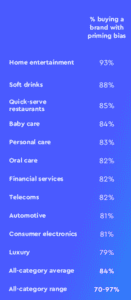
And this effect isn’t limited to big, infrequent decisions like cars or white goods. The same pattern shows up in everyday categories like toothpaste and soft drinks too — with the proportion of primed shoppers never dropping below 70% (see below).
2. How priming reduces the need to ‘buy’ customers
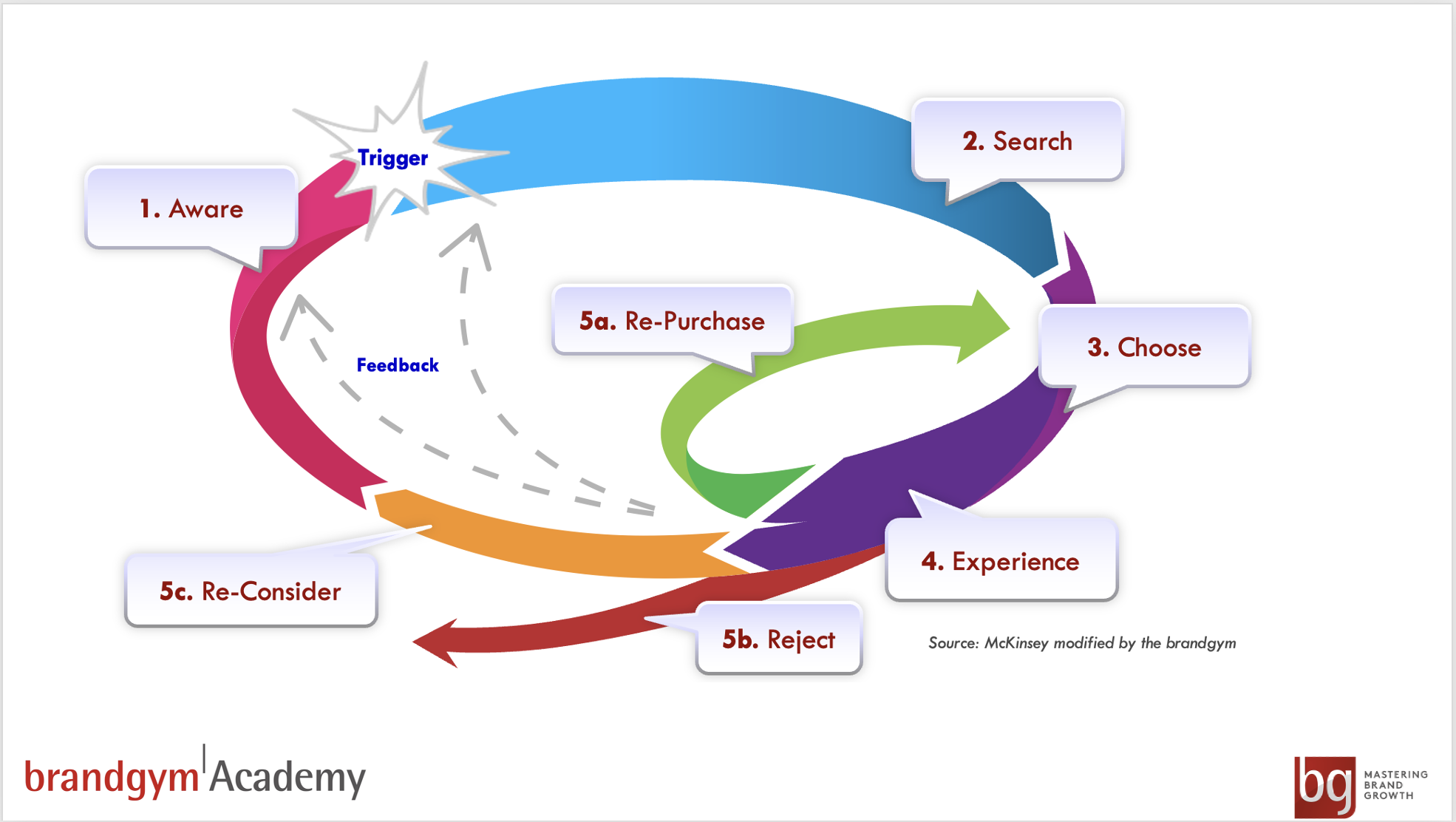
Performance marketing, such as SEM, concentrates on the Search stage of the customer decision journey (see below), once people are actively interested in buying. Focusing too much on this stage risks being in a battle to bid for key words and digital ad space.
Investing in brand marketing works earlier in the decision journey, at the Awareness stage, helping create the priming effect described earlier. This approach builds distinctive memory structure with a broad group of potential customers, not just those actively looking to buy now. So, when a trigger prompts someone to start searching, your brand is already high up their shopping list. As a result, the company has less need to use performance marketing to ‘buy’ customers. Instead, this part of the mix is used in a more selective way.
To drive the priming effect for your brand, you need to maximise the reach of your marketing. It’s no good focusing only on people actively searching the category, as 84% of these have already got a shortlist of brands. This is why BMW market not only to people looking to buy a car now, but also to prospective future buyers. And why Pampers advertise to a broad range of people, not only those buying nappies today.
3. Priming in action: Airbnb
We looked at how Airbnb invested in brand marketing to prime people in an earlier post. Airbnb re-focused marketing spend on strategic brand building, with reductions in performance marketing spend like search engine marketing (3). The brand’s ad awareness score grew from 2.8 to 14.1 in YouGov’s BrandIndex (4). And with this approach 90% of traffic to the Airbnb platform arrived directly, unaided by search advertising, according to a Forbes article (5).
Performance marketing continued at Airbnb, but in a more focused and precise way. “We think of performance marketing as more of a way to laser in to balance supply and demand rather than a way to just purchase a large amount of customers,” CEO Brian Chesky observed.
This approach helped the company post its most profitable ever quarter, with record revenue of $2.9billion up 29% year-over-year. “Its strategy of investing in brand marketing and lessening its reliance on search-engine marketing is continuing to pay off,” reported Forbes (5).
In conclusion, the new study confirms just how important the role of brand priming is in consumer decision making. It reinforces the role strategic brand building plays in getting your brand on the shopping list away before consumers start searching.
Sources:
(1) Martin Sorrel predicts growth in performance marketing
(3) Re-focus on brand marketing
