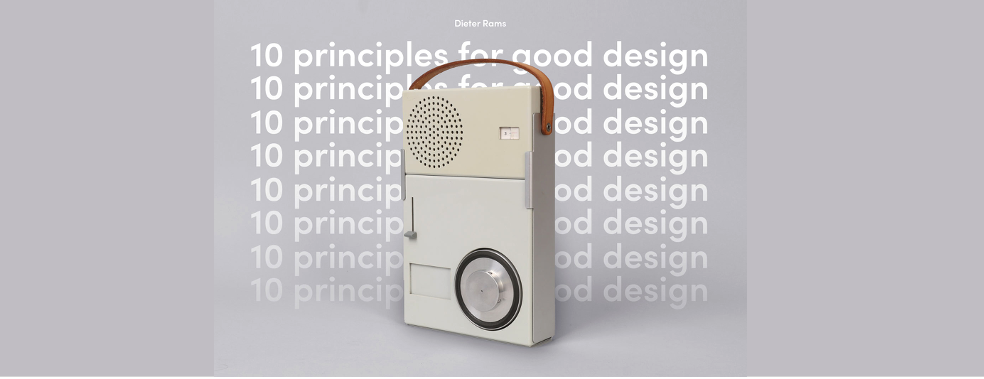
The latest week of my Mini Masters in Living a Creative Life looked at Dieter Rams, the design genius behind many of Braun’s distinctive and functional products. From radios and record players to calculators and electric shavers, Rams helped create a design language that was beautifully simple, highly functional and instantly recognisable. He captured his thinking on design in his famous 10 Principles of Good Design in the 1970s. These principles influenced generations of designers, including Apple’s former design chief Jony Ive. They really speak to me, as a core brandgym belief is that branding isn’t just about communication, it’s about designing better products that deliver both functional performance (“sausage”) and emotional appeal (“sizzle”).
Here are 10 lessons that teams can borrow with pride to build better brands, inspired by Dieter Rams’ principles.
A quick background on Dieter Rams
Dieter Rams joined Braun in 1955 and became head of design in 1961. Working alongside colleagues including Hans Gugelot, he helped transform the German company into a pioneer of modern industrial design. Instead of the decorative styling common in consumer electronics at the time, Braun products featured clean lines, simple controls, carefully considered materials and a consistent visual identity. Rams later distilled his design philosophy into 10 principles, often summarised by his famous phrase “Less, but better.”Importantly, this wasn’t about making everything look minimalist for the sake of it. It was about creating products that worked brilliantly, were easy to use and avoided unnecessary complexity.
1. Good design is innovative
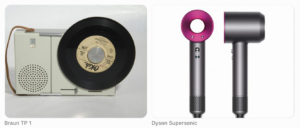
For Rams, innovation wasn’t about adding new technology simply because you could. It was about using technology to create something genuinely better. His Braun TP 1 portable radio and record player, launched in 1959, was a great example. The compact, modular design allowed people to listen to music on the move, rather than being tied to a large piece of furniture at home.
Dyson’s Supersonic hair dryer applied similar thinking when it launched in 2016. Instead of simply creating another conventional hair dryer, Dyson moved the motor into the handle, improving balance, and used its Air Multiplier technology to create controlled airflow. The distinctive ring-shaped head made the innovation instantly visible. This is a great example of product design delivering both functional benefits and a distinctive brand asset.
Brand growth inspiration: focus innovation on how you solve an unmet need, not on the new technology. Use design to make the functional improvement tangible and distinctive.
2. Good design makes a product useful
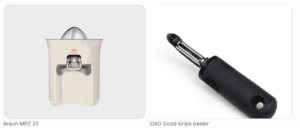
Rams believed that design should prioritise what a product actually does. His Braun MPZ 21 citrus juicer, designed with Jürgen Greubel in 1972, illustrates this principle. The straightforward form was designed around the practical job of squeezing citrus fruit, without unnecessary features or decoration.
OXO Good Grips shows how usefulness can become the foundation of an entire brand. Its kitchen utensils feature comfortable, non-slip handles that make everyday tasks easier, especially for people with reduced hand strength. The Good Grips peeler is a particularly good example: an everyday object improved through ergonomic design. The brand has turned this functional benefit into a recognisable design signature across a broad product range.
Brand growth inspiration: Identify the frustrations consumers experience when using your product. Focus design effort on solving these pain points rather than adding features for the sake of it.
3. Good design is aesthetic
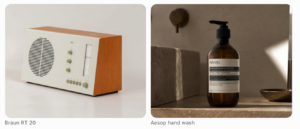
Rams believed that products we use every day should be beautiful as well as functional. His Braun RT 20 radio, launched in 1961, shows how carefully considered proportions, materials and controls can transform an everyday electronic product into something visually appealing. Importantly, the aesthetics reinforce the function rather than disguising it.
Aesop is a brilliant contemporary example of aesthetics adding brand value. Its amber bottles, understated typography and pharmacy-inspired labels create a distinctive and premium brand world. The packaging looks attractive enough to be displayed in bathrooms and kitchens rather than hidden away. The product’s appearance helps turn an everyday hand-washing routine into a more pleasurable experience.
Brand growth inspiration: Think about how your product or pack looks in consumers’ homes, not just on the supermarket shelf. Attractive design can help transform an everyday product into something consumers enjoy owning and using.
4. Good design makes a product understandable
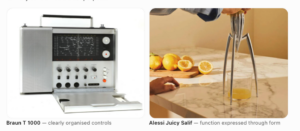
The best design makes products intuitive to use, without requiring complicated instructions. Rams’ Braun T 1000 world receiver, launched in 1963, featured a carefully organised system of dials, switches and displays. Despite its technical complexity, the design helped users understand and operate the radio.
Alessi’s Juicy Salif lemon squeezer, designed by Philippe Starck in 1988, offers a playful interpretation of this principle. Its striking, spider-like shape looks more like a sculpture than a kitchen utensil! But the function is also clear. The pointed, ridged top squeezes the lemon, while three long legs leave space for a glass underneath to collect the juice. The design turns a simple kitchen task into a distinctive experience.
Brand growth inspiration: Look at the entire consumer journey, from choosing your product to using it. Identify where people get confused and use design to make the experience more intuitive.
5. Good design is unobtrusive
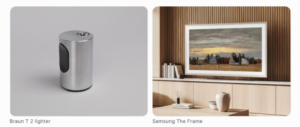
Rams argued that products should support people’s lives rather than constantly demanding attention. His Braun Cylindric T 2 lighter, designed in 1968, is a good example. Its restrained cylindrical form and simple operation made it an elegant everyday object without unnecessary visual fuss.
Samsung’s The Frame television is a clever contemporary application of this principle. Conventional televisions dominate a room with a large black screen when switched off. The Frame instead displays artwork and uses a picture-frame-inspired design to blend into the home. The product becomes less intrusive when not being used, while still delivering the functionality of a television.
Brand growth inspiration: Think about how your product fits into consumers’ everyday lives. Sometimes the best design improvement is making the product less intrusive, not more attention-grabbing.
6. Good design is honest
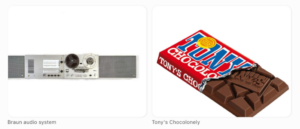
For Rams, honest design means not pretending a product is something it isn’t. His Braun L 450 loudspeakers and TG 60 tape recorder system used straightforward industrial forms, with controls and components clearly presented. There was no attempt to disguise the technology behind decorative styling.
Tony’s Chocolonely takes an interesting approach to honest design. Unlike conventional chocolate bars with neat, equally sized pieces, Tony’s bars are deliberately divided into uneven chunks. This makes the brand’s message about inequality in the cocoa supply chain tangible in the product itself. The irregular pieces are a distinctive physical expression of the brand’s mission, rather than simply another claim printed on the wrapper.
Brand growth inspiration: Look for ways to demonstrate your brand positioning through the product itself. Showing consumers what your brand stands for is more powerful than simply telling them.
7. Good design is long-lasting
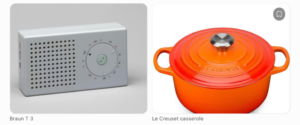
Rams believed that good design should avoid short-lived fashions. His Braun T 3 pocket radio, launched in 1958, illustrates this beautifully. Its simple rectangular form, circular speaker grille and minimal controls still look remarkably contemporary almost 70 years later. The design also famously influenced the look of Apple’s original iPod.
Le Creuset is a great example of long-lasting design. Its cast-iron casserole has retained the same recognisable overall form for decades, with its distinctive shape, handles and lid. New colours and limited editions bring freshness without losing what made the product famous. This is what we call fresh consistency: keeping a consistent core while refreshing the execution over time.
Brand growth inspiration: Build distinctive brand assets that can last for the long run. Keep these design elements that make your brand recognisable, while refreshing the details to maintain relevance.
8. Good design is thorough down to the last detail
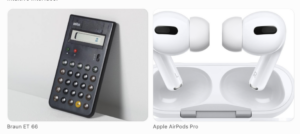
Rams believed that nothing in a product’s design should be arbitrary. The Braun ET 66 calculator, designed by his colleague Dietrich Lubs within Braun’s design team in 1987, is a great example. The size, shape, spacing and colour of the buttons were all carefully considered to create an attractive, intuitive interface.
Apple’s AirPods Pro demonstrate the commercial value of attention to detail. From the magnetic charging case and easy pairing process to the interchangeable ear tips and subtle sound feedback, individual design decisions work together to create a seamless experience. Even the satisfying way the case opens and closes contributes to the feeling of quality. These small details reinforce the premium positioning and help justify the price.
Brand growth inspiration: Review the small details in your product or service experience. Identify opportunities to create distinctive design details that reinforce your positioning and make the brand more pleasurable to use.
9. Good design is environmentally friendly
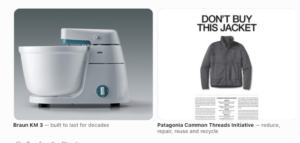
For Rams, environmental responsibility wasn’t just about using sustainable materials. It was also about designing products that last, rather than encouraging people to constantly replace them. The Braun KM 3 kitchen machine, designed by Gerd Alfred Müller in 1957, is a brilliant example. Its robust construction, simple controls and versatile attachments made it a practical kitchen workhorse. Braun manufactured the KM 3 for more than 30 years, and working examples can still be found today, doing the job almost 70 years later!
Patagonia has built a distinctive brand proposition around making clothes that last and keeping them in use for longer. Its Common Threads Initiative, launched in 2011, encouraged consumers to buy less, repair damaged garments, resell or reuse unwanted clothing and recycle items that have reached the end of their lives. Rather than simply promoting sustainability through advertising, Patagonia has built it into the product and supporting services.
Brand growth inspiration: Look beyond recycled packaging and sustainability claims. Explore how product design can reduce waste, extend product life or make repair and reuse easier.
10. Good design is as little design as possible
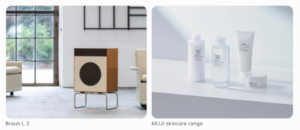
Rams’ final principle is perhaps his most famous: “Less, but better.” His Braun L 2 loudspeaker, launched in 1958, embodies this philosophy. The design strips away decorative elements to focus on the essential components needed to deliver sound. The result is a simple, understated product that doesn’t compete for attention.
MUJI has built an entire brand around this philosophy. Its products avoid unnecessary decoration, excessive packaging and prominent branding. The skincare range is a good example, with simple bottles, restrained typography and straightforward product descriptions. Importantly, this approach has become a distinctive brand signature in its own right. In a market full of products shouting for attention, MUJI stands out by being quieter.
Brand growth inspiration: Try a subtraction exercise on your product, pack or service. What can you remove without reducing effectiveness? Strip away unnecessary complexity so that the features and benefits that really matter have room to shine.
Conclusion
In conclusion, Dieter Rams’ 10 principles show that great design is about much more than making products look attractive. The best brands combine useful innovation, intuitive functionality, distinctive aesthetics and attention to detail to create products and services that people enjoy using. The biggest lesson for brand builders is to bake the brand into the product itself, rather than relying on advertising to do all the work.
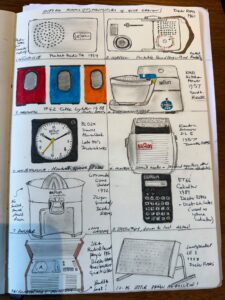
For fun, my visual summary of the week’s learning is below, with drawings of some of the products mentioned above!