

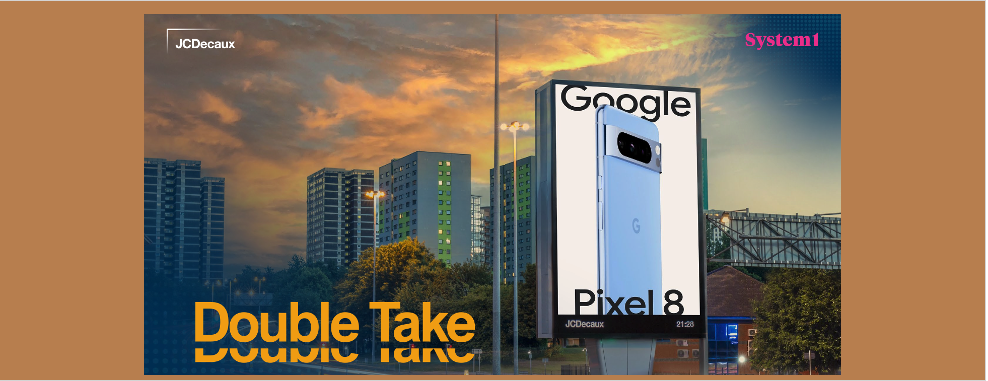
Out-of-home (OOH) advertising should be one of the most powerful brand-building tools available to marketers. It is public, high-reach, trusted and part of everyday life. But a study by System1 and JCDecaux shows a hard truth: too much OOH is invisible or forgettable (1). The research, based on over 1,000 real-world OOH ads tested with more than 180,000 people, found that 1 in 3 campaigns resulted in NO brand recognition. As a result, OOH makes up 8% of total ad spend, but only 3% of ad-generated profit. So, what separates the effective OOH from the rest of the pack?
The study identifies five success factors we headline below.
1. Be SIMPLE: design for a glance
The study shows confirms what I always believed: OOH is a glance medium: average attention is a mere 2 seconds: That means the brand, the message and the emotional hook need to land immediately. We posted before on BA’s cryptic “hidden logo” campaign, suggesting it had a low likelihood of passing “the 2 second test”.
The most “fluent” set of campaigns analysed, where most brand recognition happened within the first 2 seconds, had 54% higher campaign recall. Key factors driving fast recognition include:
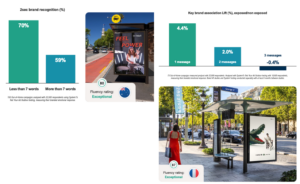
- Ads with fewer than seven words achieved 70% 2-second brand recognition vs. 59% for ads with more
- Ads with one message delivered a 4.4% key brand association lift vs. 2.0% for two messages and -0.4% for three messages
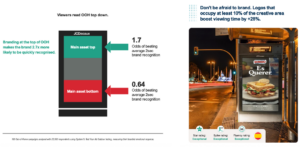
Second, brand placement matters. The study found that branding at the top of the ad makes the brand 2.7x more likely to be quickly recognised.
Third logos that occupy at least 10% of the creative area also boost viewing time by 28%.
Finally, whilst it can be tempting to use multiple brand assets, less is more. The strongest performance came from campaigns using just one or two distinctive assets.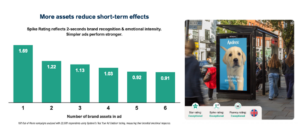
2. Be DISTINCTIVE: stand out in public
OOH has to compete with streets, stations, traffic, shopfronts, people, weather, architecture and everything else happening around it. OOH creative: earn the glance and trigger brand recognition. And to help do this, not all brand assets are created equal. Top of the table are brand characters (3x higher chance of above-average 2-second brand recognition) and distinctive product or packaging shapes (2.4x higher chance).
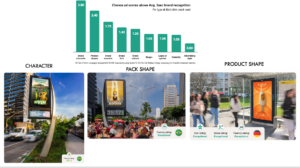
The study suggest several other practical creative levers to drive distinctiveness
- Larger product images: doubling product size increases average view time by 86%.
- Vibrant colours drive 22% higher emotional impact
- Faces increase viewing time more than any other feature and lift long-term impact
3. Be CONSISTENT: amplify your assets across channels
Consistency across channels and across time is a key part of our approach to turbo charging annual brand plans. And the study provided data that confirms that this drives effectiveness. OOH ads consistent with TV creative see a 14% uplift in 2-second brand recognition 30% higher recall.
The study again makes some practical recommendations on how to drive consistency across channels and over time:
- Reuse distinctive brand assets confidently and prominently.
- Build a strong “creative bridge” between TV, OOH, online, and more.
- Stay fresh, but stay recognisable.
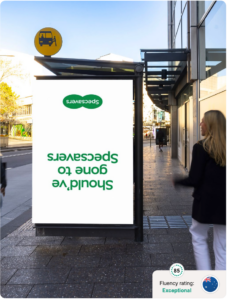
The OOH ad from the Specsavers brand we posted on here is a great example of amplifying distinctive brand assets, in this case their slogan, in a fresh and interesting way.
4. Be INTERESTING: trigger positive emotion fast
Job one of OOH is to get seen quickly. The other key job is to then make them interested enough to look a little bit longer at your ad: “dwell time”. Ads with longer than average dwell time are more effective in driving brand consideration and preference. But how do you increase dwell time?
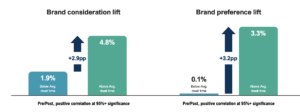
The study suggests that the key to making viewers look a bit longer is to make them feel something. OOH ads that create more emotion, as measured by System 1’s star rating, have double the commercial effect along with higher levels of message recall, sentiment lift and key action taken (e.g. website visit).
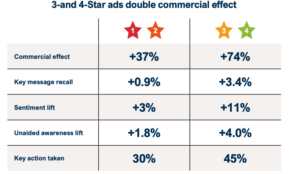
“Right-brain features” that can help increase the chances of emotional impact include:
- Prioritise positive emotion: happiness and surprise drive memory.
- Use right-brain creative features: characters, human interaction, dramatic scenes, cultural references.
- Avoid heavy text, abstract visuals, and isolated product shots
5. Be CREATIVE: surprise without confusing
OOH is full of constraints: limited time, limited space, no sound and the need for immediate branding. But the study argues that these constraints should not be a creative limitation. Rather, they should be a creative opportunity. The most effective OOH bends the rules rather then breaking them. This means taking familiar assets and giving them an unexpected twist.
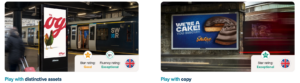
One example is to play with copy. The study rightly suggests that fewer than ten words can still create a smile, a laugh or a feeling that lasts beyond the exposure itself. The Jaffa Cakes poster below right is a good example.
Another example I’m less convinced by is playing with your logo. This only works if you have a logo that is instantly recognised. It has the potential to trigger instant recognition and emotion according to the study, with an example being the Kellogg’s poster below left (note the full logo and the cockerel character are also present).
In conclusion, the System1 and JCDecaux study shows how effective OOH is instantly recognisable, emotionally engaging and boldly distinctive. The keys to do this are to design for the 2-second test, use distinctive brand assets consistently and add a spark of creativity.
SOURCES
- Research paper by System1 and JCDecaux
