

How do you drive distinctiveness in a category with a strong brand leader? A recent Linked In article talked about the Outland brand trying to do this in stout, going up against Guinness (1). I read the article with interest, as we helped Hall & Woodhouse create the Outland brand a few years ago to enter the fast growing craft beer category. Early results are positive, as described in the article by Head of Brand Marketing Giles Mountford. Outland Stout drove 1,000 hectolitres of new on-trade volume and 30% brand growth, while operators pouring it made £1 more per pint.
Here are some key insights from the launch.
1. Find space the leader can’t easily occupy
The first rule of challenging a dominant leader is don’t fight them on their strongest ground. Guinness owns a formidable combination of heritage, visual assets, ritual and fame. Trying to create another Irish-looking stout with a similar personality would simply remind people of the original.
Outland took a different route. The wider craft beer market has brought more experimentation into pubs. This created an opportunity to serve drinkers who liked stout but were increasingly open to trying something new. Outland was well positioned to play here. From launch the brand offered beers that were “adventurous but still accessible”, rather than aimed at the hardcore craft drinkers. The territory chosen was a more contemporary, exploratory take on stout, backed by a brewer with genuine beer-making heritage.
Brand growth inspiration: don’t attack the leader head on. Look for valuable territory at the edge of the category where consumer behaviour is moving faster than the incumbent.
2. Create fresh consistency versus the category
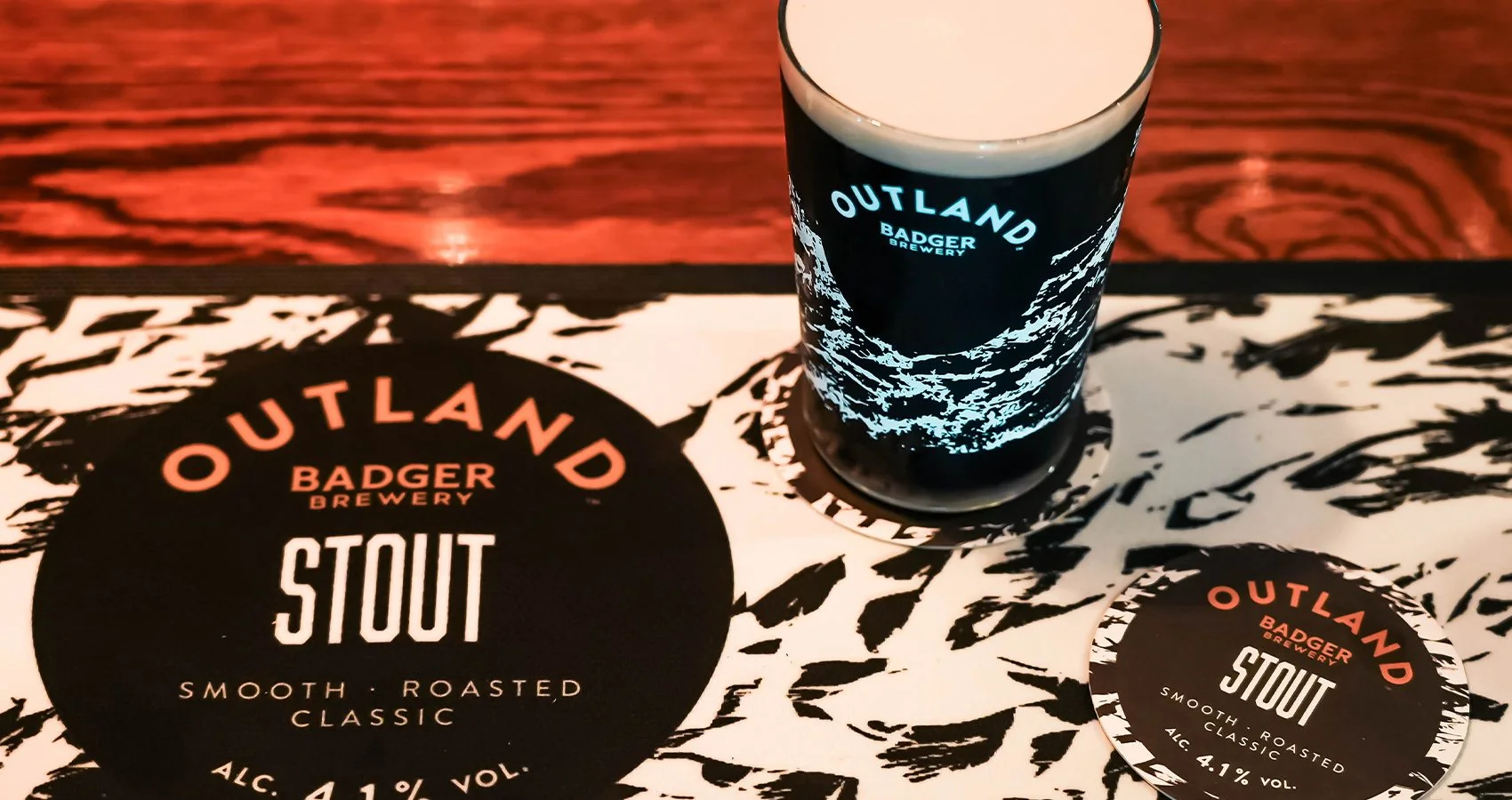
Outland’s visual brand identity builds on its roots in the Dorset countryside, using a black-and-white, nature-inspired graphic world with rugged landscape cues and bold typography.
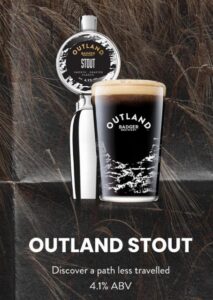
For stout, the application of this visual identity show how to deliver fresh consistency within a category. The brand keeps the important category cue of the colour black, strongly associated with stout (consistency). A fresh Outland twist comes through its distinctive rustic, countryside-inspired imagery. As the attached image shows, the black beer, tap badge and glass all feel reassuringly like stout, while the scratched, landscape-style graphics make the brand look and feel a bit different from Guinness.
The line “Discover a path less travelled” reinforces this challenger role. It brings the Outland positioning to life and encourages drinkers to experiment: rather than automatically ordering the category leader, take a different route.
Brand growth inspiration: Use fresh consistency versus the category to take on a leader. Retain familiar cues that help people recognise what you are, but bring freshness them by leveraging distinctive brand assets that make your offer stand out.
3. Make the product distinctive, not just the advertising
A challenger brand needs more than a different story with emotional “sizzle”. The product “sausage” has to be distinctive too. There is no point building a disruptive challenger proposition if the experience falls apart at the moment of truth. Hall & Woodhouse invested more than £150,000 in its keg line to enable production of a distinctive stout product.
Outland Stout is a 4.1% ABV nitro stout, designed to give the smooth, creamy drinking experience people expect from the category. Nitrogen produces smaller bubbles than conventional CO2 carbonation, creating a softer mouthfeel and the dense creamy head that has become an important part of the stout serve.
But beyond that familiar category experience is a distinctive product story. Outland is brewed in Dorset using pale, chocolate and crystal malts with roasted barley. This delivers “exceptional balance with hints of coffee and chocolate, and a touch of caramel sweetness.” (2)
Brand growth inspiration: make sure you have a distinctive product to back you your challenger proposition.
4. Shown them the money: win the operator as well as the drinker
Distinctiveness at the bar is only useful if you can get onto the bar in the first place. This was particularly important for Hall & Woodhouse because around two thirds of its pubs are tenanted. The company could not simply mandate that tenants replace Guinness with Outland. It had to sell the commercial case.
The proposition combined stronger margin, trade support and a launch plan operators could see working in their own pub. The result was striking: 70% of participating tenants put Outland Stout onto the bar where Guinness had previously been, with operators making around £1 more per pint.
Brand growth inspiration: brand building is not only about consumer communication. For many categories, you also need to win over the customer, retailer or operator who controls distribution.
In conclusion, Outland Stout shows how to drive distinctiveness when one brand dominates the category. Don’t copy the leader, build distinctiveness into the product, story and visual identity. And make sure the commercial proposition works for the people who control distribution.
SOURCES
