

This is a guest post from Ali Zouitene, an Independent Brand Strategist and Market Analyst. Ali sent us this analysis in response to a previous brandgym blogpost and we liked the initiative and thinking enough to publish the case study here.
How can a brand lose almost $12 billion of value while its product never stops working? That is the question that drew me to Olaplex. Few beauty brands have had a trajectory quite like it. Olaplex created the “bond building” haircare category, built extraordinary credibility through the professional salon community and became a bestselling haircare brand at Sephora. In September 2021, it went public at a $13.6 billion valuation. In March 2026, Henkel agreed to acquire Olaplex for roughly $1.4 billion. That’s 95% of the IPO value up in smoke in less than five years.
The Olaplex crisis
Early in 2022 a TikTok about Olaplex No.3 containing lilial—an ingredient being banned in the EU over reproductive-toxicity concerns—went viral. By late 2022, the conversation had broadened beyond lilial: consumers were increasingly posting on TikTok, Instagram and other platforms claiming Olaplex had caused hair breakage, dryness and hair loss; Bloomberg was reporting on the brand’s “‘broke my hair’ problem” by December 2022 (1). Those claims escalated into the February 2023 lawsuit by 28 women alleging hair loss and scalp damage. Revenue fell from $704 million in 2022 to $423 million by 2025.
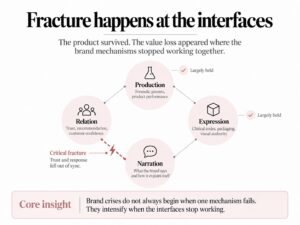
The claims at the centre of the 2023 lawsuit were ultimately dismissed or withdrawn. And the core product continued to be effective. So, what went so badly wrong? Here, I analyse the case using aBrand Operating System Audit, or BOSA. This examines how Production, Relation, Expression and Narration work together to create, protect or expose brand value.
1. Audit and act on where brand trust lives
Olaplex built one of the most efficient “trust machines” in beauty. It began in the salon chair. Stylists tried the product, saw the results and recommended it to customers. By the time Olaplex expanded into retail, much of the credibility required to sell the product had already been built for it.
The stylist became the recommendation engine, the credibility layer and, in effect, part of the sales force. That was an extraordinary advantage. It also contained a vulnerability. The stylist built and owned the trust, meaning much of Olaplex’s Relation was borrowed rather than held.
Consumers did not necessarily trust Olaplex in isolation. They trusted the professional standing behind the salon chair. When confidence in the brand weakened, the stylist had her own relationship with the customer to protect. Switching recommendation from Olaplex to K18 or Redken could happen almost invisibly. The customer did not need to consciously abandon the brand. The intermediary could make the decision for her. The channel that had built the trust became capable of quietly unbuilding it.
This lesson travels well beyond beauty. A pharmaceutical brand may borrow trust from a pharmacist. A supplement from a personal trainer. A wine from a sommelier. A financial product from an adviser. A fashion brand from a creator. Borrowed trust can be extraordinarily efficient because someone else has already done the difficult work of earning credibility. But the lender can recall it.
Key lesson: do not only ask how much trust your brand has, ask where that trust actually lives. And if intermediaries hold it, your crisis plan needs to be written for that person as much as for the end customer.

2. Understand both sides of your brand assets
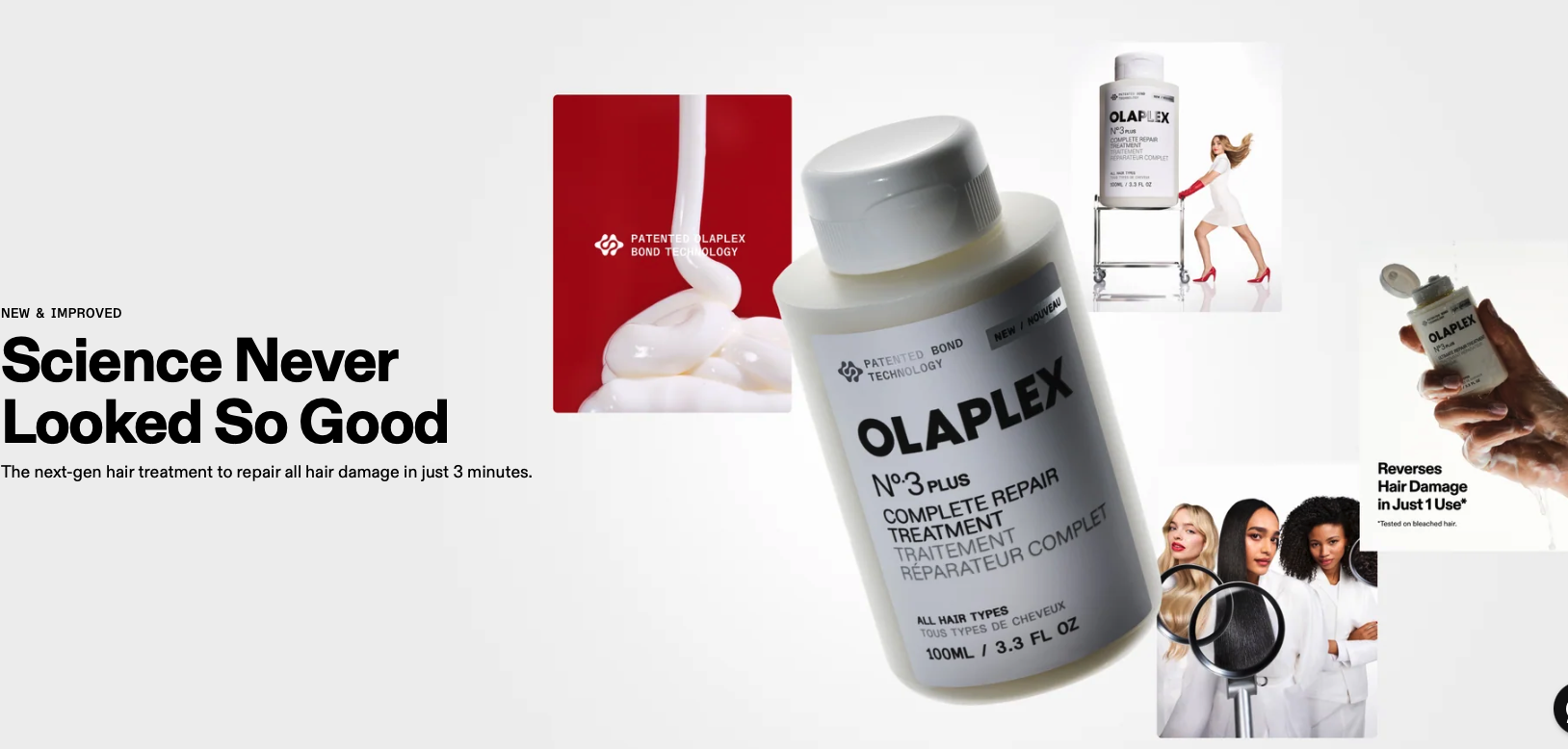
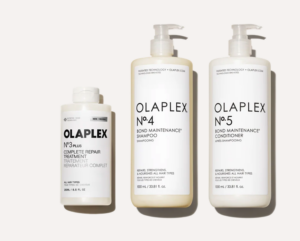
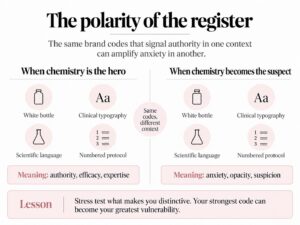
Olaplex built one of the most distinctive brands in haircare. Distinctive brand assets included 1. the white bottle, 2. clinical typography, 3. a chemical sounding name, 4. the molecule at the centre of the story. and 5. products numbered from No.0 through No.9 like steps in a treatment protocol.
Everything signalled science and the laboratory, rather than traditional beauty. That was powerful because it made the science visible and helped Olaplex feel credible and different. The clinical look suggested expertise. The molecule suggested innovation. The numbered products suggested a serious treatment system.
But distinctive brand assets can work in two directions. I call this “polarity”.
When chemistry was the hero of the Olaplex story, these assets reinforced trust. Then chemistry itself came under scrutiny. Suddenly, those same assets took on a different meaning. The clinical aesthetic that had signalled authority could now reinforce anxiety. The molecule that had represented innovation became harder to explain during an emotional and speedy social media controversy.
The case exposes an uncomfortable feature of distinctiveness: the stronger the code, the more meaning it concentrates. And concentrated meaning can travel in both directions. This is an important lesson about distinctiveness: the stronger the asset, the more meaning it carries. And that meaning can turn against a brand when the context changes. A sustainability brand can see conviction become hypocrisy. Exclusivity can become arrogance. Technological sophistication can become opacity when the technology itself is questioned.
Key lesson: stress-test your strongest distinctive assets before a crisis happens. What does our most distinctive asset communicate when things are going well? What could that same asset communicate if the context turned against us? And how could we respond to and ideally “neutralise” these issues?
3. Do not speak with a courtroom voice in a living room
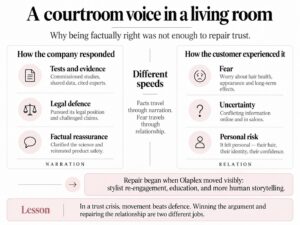
The most revealing moment in the case came when Olaplex was challenged directly. The company had strong facts on its side. It defended the safety of its products, published testing and described the claims against it as baseless. By July 2023, the claims had been dismissed or withdrawn. Yet sales still fell sharply.
Why? Because the company was answering one type of problem while the customer was experiencing another.
Olaplex’s Narration, its messaging, treated the crisis as a dispute of fact. The company answered with evidence and defence.
But a frightened customer was not waiting for a legal conclusion. She was asking whether the product in her bathroom could still be trusted. She needed support in terms of her Relation with the brand.
Olaplex was, in effect, “using a courtroom voice to speak in the living room”. Being factually right mattered. But being right is an input to trust, not a substitute for it.
The later rescue of the brand is revealing. Under new leadership, Olaplex re engaged the professional community, invested in salon education, reframed clinical data as storytelling and refreshed the brand identity. This did not mean abandoning evidence or accepting claims that were false. It meant understanding the order in which trust is repaired.
Key lesson: Listen visibly. Move visibly. Bring the people who hold the customer’s trust into the response. Then let the evidence reinforce the movement.
Conclusion
It would be easy to call Olaplex a communications failure, but the bigger lesson is that brands are systems. Customers do not separate product, communication, identity and relationships—they experience them together. Olaplex’s Product side (patents and distinctive brand assets) largely held and the legal defence succeeded. However, huge value was still lost because trust broke down owing to a fracture between Narration (what the brand said) and Relation (what customers experienced).
Key lesson: stress-test the connections between these parts before a crisis: understand where trust really lives, how your strongest brand assets could take on a negative meaning, and make sure the voice protecting the business legally is also capable of protecting the customer relationship.
SOURCES
