


Making the case for brand investment is a challenge for B2B marketers. I saw this first-hand last week, on a project for a private equity backed US-based food business. “The team don’t really care about the brand,” complained the marketing director. “All they want to talk about is profit margins, supply chain and cost reduction!”. A timely and excellent post by Paul Dervan (1) came to the rescue. He showed three ways that brand building pays back for B2B brands and, in fact, for all types of brands. Together, these can help create what we call “brand-led growth”.
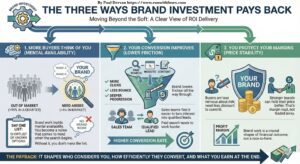
Below is a brilliant visual Paul created to summarise the three drivers of brand-led growth we cover below.
1. GETS you ON THE “DAY 1 LIST”
In most B2B categories, c. 90–95% of buyers are out of market at any moment. Building “mental availability” is a key commercial weapon. When the moment of need finally hits, buyers have in mind what Bain calls the “Day One List”: two to three brands they have already heard of. If you’re not on this mental shortlist, you’re on the back foot before the buying process even begins.
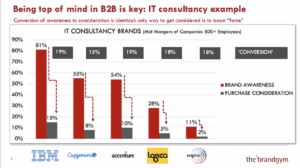
Brand investment helps you stay top-of-mind during the long “quiet” periods. You build familiarity and trust before the buying process begins. The data below on IT consultancies from our Mastering Brand Growth program shows how this works. Conversion of awareness to consideration is identical across brands. The only way to increase consideration is to boost “fame”.
To note, this process applies to consumer brands, not just B2B ones. Pampers advertises to a broad group of people, not just people with babies. That way, when people do have a baby the Pampers brands is one their Day One List. The same applies to brands of cars, computers andmobile phones.
2. REDUCES FRICTION THROUGH THE FUNNEL
A strong brand can do more than just win attention. Brand-led B2B companies use their brands as “a friction-reduction” devices. They lubricate the entire pipeline:
- Higher click-through rates because the brand is recognised
- Better quality scores in Google and LinkedIn, lowering cost per click (CPC)
- Higher landing page conversion, because brand familiarity reduces perceived risk
- More effective sales conversations, because reps aren’t starting from zero
3. PROTECTS PRICING POWER
Pricing power is where brand investment really earns its keep and where B2B leaders often underestimate the impact.
When your brand is strong, buyers feel safer. They worry less about reputational risk. This means they are likely to demand less discount before committing.
A well-established brand with strong distinctive assets can:
- Hold the line on rate cards
- Reduce reliance on promotion cycles and end-of-quarter discounting
- Increase price elasticity: buyers will pay more for perceived reliability
In conclusion, B2B brand building isn’t a “nice to have” for teams, it can be an engine of growth. By boosting mental availability, reducing friction through the funnel and strengthening pricing power, brand investment can drive profitable growth.
Sources:
